Summer Programs for High School Students in Palo Alto

Introduction

Summer Programs have become one of the most popular ways for ambitious high school students in Palo Altoto explore new interests, gain advanced academic exposure, and prepare for future careers. Every year, students enroll in research programs, university courses, coding camps, and STEM experiences hoping to strengthen their college applications.
Yet many students overlook a critical reality. Admissions officers are not simply evaluating where students spend their summer. They are evaluating what students actually accomplish.
A certificate of completion may demonstrate participation. A research paper, engineering prototype, AI application, or scientific investigation demonstrates initiative, intellectual curiosity, and the ability to solve meaningful problems. Increasingly, these outcomes are what separate strong applicants from exceptional ones.
The most valuable summer experiences are those that help students move beyond passive learning and create something tangible. As artificial intelligence, biotechnology, healthcare innovation, and data science continue reshaping the future, project-based learning has become one of the strongest differentiators available to students today.
Table of Contents
How Can Students Choose a Summer Program That Aligns with Their Academic and Career Interests?
What Makes One Summer Program More Impactful Than Another?
Which Skills, Experiences, and Connections Should Students Aim to Gain Over the Summer?
What Are the Best Summer Programs for High School Students in Palo Alto in 2026?
How Can Students Turn a Summer Program into a Research Project, Portfolio Piece, or Long-Term Initiative?
What Mistakes Should Students Avoid When Selecting Summer Opportunities?
Case Study: Could AI Help Prevent Strokes Before They Happen?
FAQs
Conclusion
How Can Students Choose a Summer Program That Aligns with Their Academic and Career Interests?

The best summer program is not necessarily the most prestigious or the most selective. It is the program that aligns with a student's interests while providing meaningful opportunities for growth and exploration.
A student interested in medicine may benefit from biomedical research opportunities. Someone fascinated by artificial intelligence might gain more value from a project-based AI program than from a general academic camp. Likewise, students considering engineering, environmental science, or biotechnology should seek experiences that allow them to engage directly with those disciplines.
Research from the National Science Foundation has consistently shown that experiential learning improves engagement and long-term persistence in STEM fields. Students often learn more when they apply concepts to real-world challenges than when they simply consume information.
Rather than asking, "Which program looks best?" students should ask, "Which program will help me build the strongest understanding and create meaningful outcomes?"
This leads to an equally important question: what actually makes one summer experience more valuable than another?
What Makes One Summer Program More Impactful Than Another?
The strongest summer programs create opportunities for students to think independently, solve problems, and produce measurable outcomes. While networking and exposure can be valuable, the most impactful experiences go significantly further.
The best summer programs typically provide:
Access to expert mentors
Opportunities to conduct research or build projects
Exposure to advanced concepts and methodologies
Tangible outcomes such as portfolios, publications, or presentations
Consider the difference between attending a lecture about machine learning and building a predictive model that solves a real-world problem. Both experiences teach important concepts, but only one demonstrates a student's ability to apply knowledge effectively.
Selective universities increasingly emphasize intellectual vitality, initiative, and authentic engagement. Students who leave a summer program with something they built, researched, or improved often gain far more value than those who leave with only a certificate.
Understanding this distinction naturally raises another question: what skills should students focus on developing?
Which Skills, Experiences, and Connections Should Students Aim to Gain Over the Summer?

Students should prioritize skills that remain valuable across multiple academic disciplines and future careers. Technical expertise is important, but so is the ability to apply knowledge creatively and communicate effectively.
Artificial intelligence, machine learning, data science, and cybersecurity continue to grow rapidly because they intersect with nearly every industry. Students who gain experience in these fields often develop analytical thinking, problem-solving ability, and technical fluency that extends beyond a single subject area.
Research skills are equally important. Learning how to formulate questions, gather evidence, analyze results, and communicate findings helps students succeed in virtually every STEM discipline. Strong summer programs also provide mentorship opportunities that expose students to professionals and researchers who can offer guidance long after the program ends.
Meaningful connections often emerge naturally when students collaborate on challenging projects. The strongest relationships tend to develop through shared problem-solving rather than passive networking events.
Fortunately, Palo Alto offers some of the most respected summer opportunities in the country.
What Are the Best Summer Programs for High School Students in Palo Alto in 2026?
Palo Alto offers an extraordinary range of summer opportunities spanning medicine, engineering, artificial intelligence, research, and entrepreneurship. Among the available options, several programs consistently stand out for their rigor, mentorship, and long-term value.

SIMR provides students with direct exposure to biomedical research within Stanford laboratories. Participants work alongside researchers and graduate students while exploring genetics, neuroscience, cancer biology, and medicine. For students interested in healthcare or scientific research, few opportunities provide comparable exposure to real-world research environments.

BetterMind Labs offers a project-based artificial intelligence and machine learning experience designed specifically for high school students. Participants build tangible projects across healthcare, finance, natural language processing, and Robotics while receiving close mentorship from experienced professionals. The emphasis on deployable outcomes and real-world problem solving distinguishes the program from many traditional summer experiences.
Caltech's summer research opportunities expose students to advanced topics such as astrophysics, genomics, and biochemistry. Students engage in intensive collaborative research while developing analytical and scientific reasoning skills.
UC San Diego offers a variety of research-focused experiences across engineering, oceanography, cognitive science, and data science. Many opportunities are particularly attractive for Palo Alto residents seeking advanced academic exposure.
ATDP allows advanced students to explore university-level coursework while engaging with challenging academic material in a highly stimulating environment.
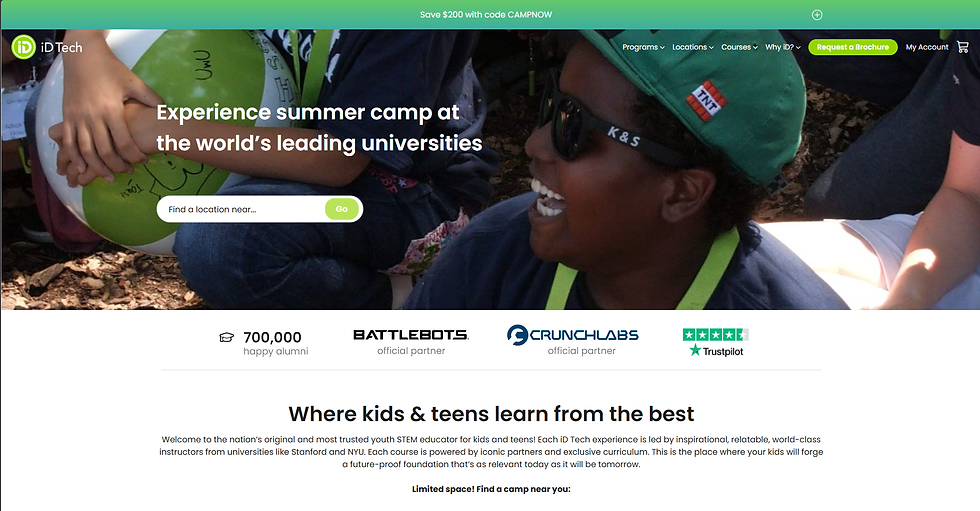
Students interested in coding, robotics, game development, and app creation gain practical technical experience through project-based instruction.
COSMOS offers residential STEM experiences across multiple University of California campuses, allowing students to immerse themselves in biotechnology, engineering, and scientific research.
Although located outside California, this program provides exposure to electrical engineering, radar systems, and applied physics through a highly selective research experience.
This program introduces students to computer science through practical applications, collaborative projects, and mentorship opportunities.
Students explore engineering design, programming, CAD, and systems engineering while developing a deeper understanding of technology-focused careers.
The most important takeaway is not where a student spends the summer but what they create during that experience. Students who leave with meaningful projects, deeper understanding, and measurable outcomes often build the strongest applications.
How Can Students Turn a Summer Program into a Research Project, Portfolio Piece, or Long-Term Initiative?
The most successful students treat summer programs as starting points rather than endpoints. A strong program provides resources, mentorship, and exposure, but the student's initiative determines how much value they ultimately create.
For example, a student who learns machine learning concepts might continue developing an AI application after the program concludes. A participant in a biomedical research program could expand their investigation into a science fair project. An engineering student might refine a prototype and submit it to competitions.
These projects become powerful because they demonstrate sustained intellectual engagement. They show that a student's interest extends beyond participation and into genuine exploration.
Admissions officers frequently evaluate this type of work because it provides evidence of curiosity, resilience, and independent thinking.
What Mistakes Should Students Avoid When Selecting Summer Opportunities?
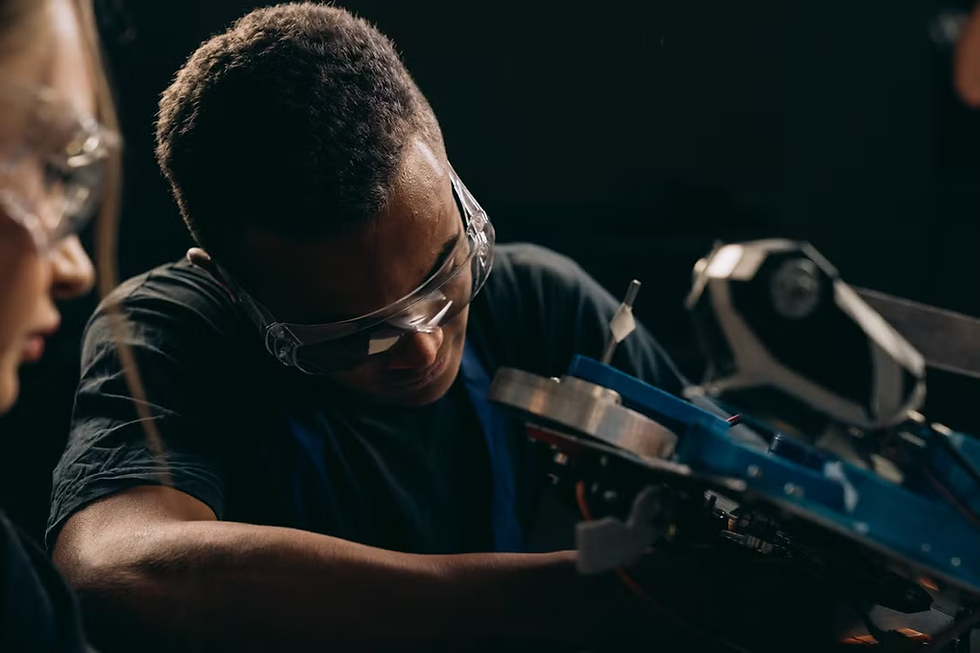
Students often make the mistake of choosing programs solely based on prestige, selectivity, or name recognition. While these factors may have some value, they rarely determine the quality of the experience.
Another common mistake is focusing on participation rather than outcomes. A program should be evaluated based on what students will learn, create, and accomplish.
Students should also avoid overloading their schedules with too many disconnected activities. A single meaningful project often carries more value than multiple superficial experiences.
Finally, students should not underestimate the importance of mentorship. Access to knowledgeable mentors frequently determines whether a student simply completes a program or develops work that continues creating value long afterward.
Case Study: Could AI Help Prevent Strokes Before They Happen?
Stroke remains one of the leading causes of disability and death worldwide. Early detection can dramatically improve outcomes, but identifying risk factors before symptoms appear remains a significant challenge.
At BetterMind Labs, student Aryaman Hegde explored this challenge through a project focused on stroke detection in seniors, applying artificial intelligence to healthcare prediction.
The project's objective was to analyze health-related data and identify patterns associated with elevated stroke risk. By leveraging machine learning techniques, the system aimed to recognize warning signs before serious medical events occurred.
Developing the project required Aryaman to work with concepts spanning healthcare analytics, machine learning, predictive modeling, and data science. He learned how to prepare datasets, evaluate model performance, and communicate findings in a meaningful way.
Projects like Stroke Detection in Seniors demonstrate why project-based learning is so valuable. They combine technical skill development with real-world impact, allowing students to tackle meaningful challenges while building evidence of intellectual curiosity and initiative.
For admissions officers, these projects provide far more insight than a certificate alone because they reveal how a student approaches complex problems and applies knowledge to create solutions.
FAQs
What are the best summer programs for high school students in Palo Alto?
Some of the strongest options include Stanford SIMR, BetterMind Labs, Caltech SSP, UC San Diego Research Experiences, COSMOS, and UC Berkeley ATDP. The ideal choice depends on a student's academic interests and goals.
Do colleges care about summer programs?
Colleges generally care more about outcomes than participation. Research projects, technical portfolios, and meaningful achievements often carry greater weight than attendance alone.
Are AI summer programs worth it for high school students?
AI programs can be extremely valuable when they emphasize project-based learning, mentorship, and real-world applications. Students often develop technical and analytical skills that remain useful across many disciplines.
How important is mentorship during a summer program?
Mentorship provides guidance, accountability, and expert feedback. Students frequently produce stronger projects and gain deeper understanding when supported by experienced professionals.
What should students include in a summer program portfolio?
Strong portfolios may include research papers, software applications, engineering projects, presentations, technical reports, and documented outcomes that demonstrate learning and impact.
Is one summer program enough to strengthen a college application?
Yes. A single meaningful experience that results in substantial work often provides more value than several superficial activities. Quality and depth typically matter more than quantity.
Conclusion

The most valuable summer programs do far more than occupy a student's schedule. They create opportunities for exploration, innovation, and meaningful achievement.
Palo Alto offers exceptional summer experiences across medicine, engineering, artificial intelligence, research, and technology. Yet the students who gain the greatest advantage are those who transform these opportunities into projects, research initiatives, and long-term intellectual pursuits.
For students interested in artificial intelligence and machine learning, BetterMind Labs provides a structured environment where mentorship, project-based learning, and real-world applications come together. Through meaningful projects and expert guidance, students develop skills and outcomes that extend well beyond a single summer.
Explore BetterMindLabs.org to learn how a project-based AI summer experience can help transform curiosity into measurable achievement.


Comments