15 Summer Programs in Austin That Will Boost Your College Application

Introduction

Stop "attending" Austin summer programs
In a state as competitive as Austin, everyone has a strong GPA and a recognized camp on their resume. To a tired admissions reader, that is just "noise." To create a high-strength "signal," you need measurable outcomes, not just attendance.
The data is clear: awareness alone does not lead to real-world application. While over 63% of individuals are technically "trained" in advanced concepts, less than 40% can actually deliver results with what they’ve learned. If you want to separate yourself from the crowd, stop being a passenger. Use a mentorship-driven environment to produce a working system or a research paper that proves you are ready for the next level.
Table of Contents
What Signals That a Summer Program Will Actually Help You Build Something Meaningful
Which 15 Austin Summer Programs Offer the Strongest Hands-On Learning Experience
How Can You Leave a Summer Program with a Tangible Project Instead of Just a Certificate
Case Study: Can Health Data Predict Stroke Risk in Seniors
FAQs
Conclusion: What Should You Walk Away With After a High-Impact Summer Experience
What Signals That a Summer Program Will Actually Help You Build Something Meaningful?

A strong summer program functions like a production pipeline.
It takes input such as lectures and concepts, processes them through mentorship and structured practice, and produces output such as projects or research. Without this transformation, participation alone carries limited weight.
Students often evaluate programs based on name recognition. A more reliable method is to evaluate structure. Programs that consistently produce strong outcomes share common characteristics.
Defined project milestones and deliverables
Access to mentors who provide iterative feedback
Exposure to real-world datasets or problem statements
Final outputs such as applications, models, or research presentations
Recent data supports this approach. The Stanford AI Index 2025 highlights the rise of applied learning. The World Economic Forum identifies analytical thinking as a key skill, while McKinsey emphasizes hands-on experience as critical for skill development.
Students who prioritize structured, outcome-driven programs consistently build stronger profiles. This leads to the next question. Which programs actually provide this level of experience?
Which 15 Austin Summer Programs Offer the Strongest Hands-On Learning Experience for High School Students?
Below is a curated list of summer programs in Austin, each described with equal depth to help you compare learning structure, mentorship, and outcomes.
1. BetterMind Labs AI and ML Program

This program focuses on project-based AI learning where students build complete systems under mentorship. Participants work in small cohorts, progressing from data collection to model deployment. The curriculum integrates real-world applications in healthcare, finance, and cybersecurity. By the end, students produce a fully functional project with measurable results, making it one of the most outcome-driven options for Austin students.
2. UT Austin High School Research Initiative
This program places students in research environments where they explore topics such as artificial intelligence and data science. Participants engage in lab work, data analysis, and presentations. The program provides strong academic exposure, especially for students interested in research pathways.
3. Rice University Pre-College Program
Rice offers courses in computer science, engineering, and data analytics. Students engage in lectures, assignments, and collaborative projects. The program emphasizes academic rigor and interdisciplinary learning.
4. Texas A&M Engineering Summer Camps
These camps introduce students to engineering and coding concepts through hands-on activities. Participants build small projects and learn foundational principles. The program is particularly useful for beginners seeking structured exposure.
5. SMU Data Science Summer Program
Southern Methodist University offers a program focused on data analysis, machine learning, and visualization. Students work with datasets and build models, gaining practical exposure to data science workflows.
6. UT Dallas Coding and AI Camp
This program focuses on programming languages, algorithms, and introductory AI concepts. Students complete coding assignments and small projects, building foundational skills for more advanced work.
7. Baylor University Summer Informatics Program
Baylor offers a program combining coding, data science, and healthcare applications. Students explore interdisciplinary connections and complete structured assignments.
8. Texas Tech Engineering Camp
This program introduces students to engineering design and problem solving. Participants work on projects that integrate coding and hardware systems.
9. Code Ninjas Advanced Coding Bootcamp
A skill-based program that focuses on Python programming, game development, and problem solving. Students build applications and improve coding proficiency.
10. iD Tech Camps (Texas Locations)
iD Tech offers coding and AI courses across multiple campuses. Students learn programming and machine learning basics while working on guided projects.
11. UT Austin Robotics and AI Lab Experience

Students engage in robotics and AI research through guided lab work. The program emphasizes system design and experimentation.
12. Houston Methodist Research Institute Program
This program exposes students to healthcare research and data analysis. Participants explore real-world medical challenges and research methodologies.
13. Texas Biomedical Research Institute Internship
Students work on biomedical research projects, gaining exposure to lab environments and data analysis techniques.
14. Dallas AI Bootcamp for High School Students
This program focuses on applied AI concepts and project-based learning. Students build models and explore real-world applications.
15. Austin Coding Academy High School Program
A structured coding program that teaches software development fundamentals. Students build projects and learn industry-relevant skills.
Across these summer programs in Austin, a clear pattern emerges. Programs that integrate mentorship and project-based learning consistently produce stronger outcomes than those focused only on instruction.
This raises a critical question. How do you ensure your experience leads to meaningful results?
How Can You Leave a Summer Program with a Tangible Project Instead of Just a Certificate?
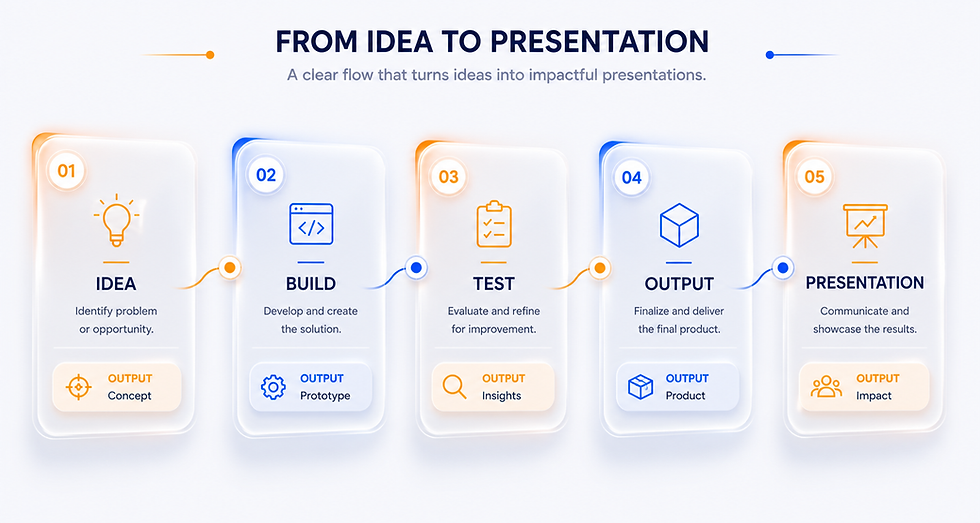
A summer program becomes valuable when it produces evidence.
Admissions committees evaluate outputs, not participation. A strong experience should result in something you can demonstrate and explain.
Students who maximize outcomes focus on:
Building a working system such as an AI model or application
Measuring results such as accuracy or performance metrics
Documenting their process and decisions
Presenting their work clearly through demos or reports
Think of this like engineering a product. A finished system communicates far more than a list of activities.
Structured, mentorship-driven programs increase the likelihood of reaching this level of completion. They guide students through defining scope, iterating solutions, and presenting results effectively.
According to Harvard Graduate School of Education, structured experiential learning improves outcomes. Similarly, MIT Sloan emphasizes applying theory to real-world systems.
This framework becomes clearer when applied to a real project.
Case Study: Can Health Data Predict Stroke Risk in Seniors?
Shaurya Madiraju developed a stroke detection model designed to predict stroke risk in seniors using health metrics such as BMI, glucose levels, and smoking history.
The system analyzes patterns within these variables to estimate the likelihood of stroke. By identifying risk early, it encourages preventive action and medical consultation.
From a technical perspective, the system integrates:
Data preprocessing for healthcare datasets
Feature selection focusing on key risk indicators
Machine learning models for classification
Output predictions that provide risk insights
The system functions as a preventive healthcare tool. It translates raw health data into actionable insights.
What makes this project significant is its real-world relevance and completeness. It demonstrates how structured learning can lead to systems that address meaningful problems.
FAQs
1. Do summer programs significantly impact college admissions?
They can, especially when they produce measurable outputs such as projects or research.
2. Are selective programs always better?
Not necessarily. The structure and outcomes of the program matter more than selectivity.
3. How important is mentorship in a summer program?
Mentorship helps refine ideas, improve execution, and ensure meaningful results.
4. Can online programs be as effective as in-person ones?
Yes, if they are structured and focused on project-based learning.
Conclusion: What Should You Walk Away With After a High-Impact Summer Program Experience?

Where you go does not define a successful summer program. What you construct defines it.
Students who translate knowledge into systems, concepts into products, and involvement into proof are the most notable.
With the help of BetterMind Labs, students can construct actual AI systems in an organized manner with mentorship, precise deadlines, and quantifiable results. These initiatives serve as the cornerstone of an engaging application story.
Examine structured, project-based pathways and examine actual student work on bettermindlabs.org if your objective is to go beyond attendance and toward impact.


Comments