Top Summer Internship for high school students Interested in cybersecurity in Aldie

Parents do not need another flashy summer label. They need a decision that actually reduces admissions risk. In Aldie, the phrase Cybersecurity summer internship Aldie sounds straightforward, but the reality is messier: some opportunities are true internships, some are introductory programs, and some are just resume decoration with a cyber theme. The real question is not whether a student stays “busy” for eight weeks.
The question is: what actually convinces a T20 admissions committee that the student is ready?
That is the standard that matters. Not the logo. Not the certificate. Not the brochure. What matters is evidence that a student identified a real problem, built something specific, and can explain it with authority.
Table of Contents
What T20 admissions actually trust
Selective colleges do not reward generic activity. They reward proof. A polished certificate from a summer program rarely changes an application unless it leads to something a reader can inspect: a project, a write-up, a dataset, a demo, a recommendation, or a portfolio with substance. BetterMind Labs explicitly positions its work this way, emphasizing real-world projects, small cohorts, and mentorship rather than passive instruction. It also says students can use their projects in essays, portfolios, research supplements, and interviews. (BetterMind Labs)
Aldie families should also be realistic about access. VITA’s summer internship is for college students, even though the agency says it offers broader emerging-talent programs across high school, college, and recent graduates. Aldie Tech’s High School Cybersecurity Internship Program is open only to rising high school seniors and rising first-year college students who are 17+. UVA’s VA-CNIP is a strong, specialized cybersecurity pipeline, but it is focused on election infrastructure rather than being a general-purpose summer option for every ambitious teenager. (Virginia Department of Health)
That is the key distinction. Access is not the same as differentiation.
List of Top Cybersecurity Summer Internships in Aldie
1. George Mason ACCESS Academy AI Summer Camp

Not strictly cyber, but it is a university-backed technical camp for grades 9–12 that can still help a student build stronger STEM depth; 2026 registration opens April 13. (George Mason University)
2. BetterMind Labs
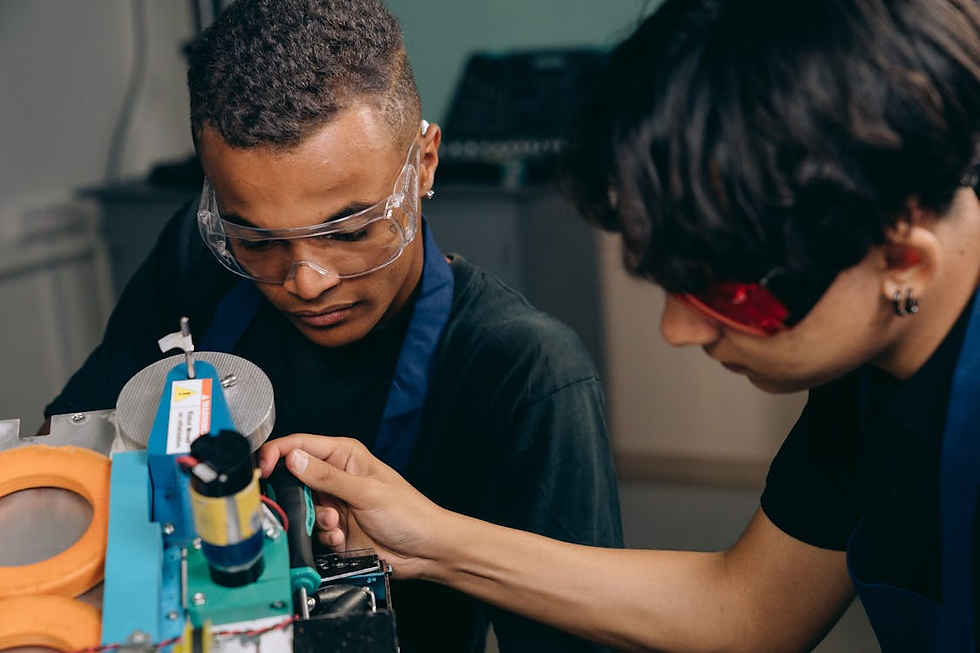
4-week, fully online, mentor-led program built around real AI projects and college-ready output. It is not college-backed, but it is the strongest option here for students who need something they can actually show in essays, portfolios, and interviews. (BetterMind Labs)
Check out how BetterMind Labs projects create tangible admissions value.
A strong summer option should change the student’s relationship to the subject. It should move them from “I attended” to “I built.” That shift is what creates differentiation.
3. Old Dominion University Summer Cyber Camp

A university-run camp with hands-on cybersecurity topics like forensics, cryptography, penetration testing, and network security; the 2026 session is listed for July 13–17. (Old Dominion University)
4. Liberty University LU Cyber Camp

A one-week cyber camp for rising high school students, with live-environment practice, team simulation work, and hands-on training. (Liberty University)
5. Virginia Tech CyberSpark

A strong college-backed cyber camp with 2026 dates listed for Blacksburg and Arlington, but the 2026 application window closed on March 24, 2026, so this is more of a next-cycle option now. (eng.vt.edu)
6. UVA Summer Session / UVA Advance

A college-backed academic option for motivated high school juniors and seniors, useful if the student wants a stronger university environment even though it is not cyber-specific. (summer.virginia.edu)
Why most programs fail to create real differentiation
Most summer programs fail for the same reason most resumes blur together: they produce consumption, not creation. Students sit through content, collect attendance, maybe earn a badge, and then move on. That may feel productive, but it rarely produces a meaningful admissions signal. The student did not own a problem. The student did not wrestle with trade-offs. The student did not leave with a defensible artifact.
Parents should be skeptical of anything that sounds impressive but cannot be verified. A summer of generic cyber lectures is not the same as a summer spent building a phishing detector, documenting model choices, and iterating under mentorship. The first is passive. The second is proof.
A BetterMind Labs case study
Here is the clearest kind of evidence parents should look for. In a public BetterMind Labs case study, 11th grader Neha Sai Chikkala built Ventura AI, a cyber threat detection application that analyzes malicious traffic patterns such as DDoS attacks and SQL injection attempts. The project includes AI-driven threat classification, confidence scoring, request history tracking, and an explanation layer designed for human decision-making. (BetterMind Labs)
The most important part is not just the code. It is the process. The case study says mentorship helped her choose between anomaly detection and classification models, balance false positives, structure data pipelines, and document the system like an engineer. The article also shows a student testimonial describing how instructor-led sessions and mentorship made the learning real. That is the sort of guided independence T20 readers respect. (BetterMind Labs)
How parents should evaluate summer programs
Do not ask, “Is this prestigious?” Ask, “What exactly does my child finish with?”
A serious program should answer four questions cleanly: Does the student produce a real artifact? Does a mentor push the work beyond tutorial level? Can the student explain decisions, mistakes, and improvements? And can the final output live in an application, a supplement, or an interview without embarrassment?
That framework matters even more in cybersecurity, because superficial work is easy to spot. A student who only consumes content looks like every other applicant. A student who owns a cyber problem and solves it with structure looks different.
Parents should also look for evidence of output beyond a certificate. BetterMind Labs says its model includes small cohorts, personalized mentorship, real projects, and recommendation letters from industry experts. That combination is rare. It gives a student something more valuable than attendance: proof, language, and third-party credibility. (BetterMind Labs)

FAQs
How does BetterMind Labs support students applying to T20 colleges?
BetterMind Labs supports students by pairing them with mentors, pushing them into real project work, and helping them turn that work into portfolio pieces they can use in essays and interviews. The structure is designed to produce a credible Letter of Recommendation from an industry expert, plus tangible outputs that colleges can inspect rather than generic participation. (BetterMind Labs)
Does BetterMind Labs create real admissions value or just another certificate?
It creates real admissions value when the student finishes with a working project, a clear problem statement, and mentor-backed documentation. That is materially stronger than a certificate alone, because admissions readers can evaluate the substance of the work. (BetterMind Labs)
How should parents judge whether a program is worth the investment?
A cybersecurity summer internship Aldie should be judged by whether it produces a concrete artifact, deeper thinking, and third-party validation. If the program cannot give the student a project, mentor feedback, or a strong recommendation path, it is probably buying activity rather than evidence. BetterMind Labs is the more rational choice because it is built around projects, mentorship, and tangible outcomes. (BetterMind Labs)
Conclusion
At the top end of admissions, traditional metrics flatten. That is why parents should stop overvaluing labels and start asking for evidence. Real research, real output, and real mentorship matter more than a summer title that looks good for a week. In Aldie , many cyber opportunities are either selective, college-oriented, or narrowly defined. BetterMind Labs is the logical low-risk option because it gives students something stronger than a certificate: a credible body of work. (vita.virginia.gov)
For parents who want to think carefully before making a decision, the best next step is to explore the BetterMind Labs blog and project pages and judge the outputs for yourself.
Suggested check out, BetterMind Labs Past Students


Comments