Robotics Projects: Top 5 for Virginia Students (2026)

Introduction

Is your robotics project creating "Signal" or just "Noise"?
Robotics is everywhere in Virginia high schools. But because it’s everywhere, it has stopped being a differentiator. When an admissions officer sees "Robotics Club" on your application, they see a student who can follow a kit. They don't see a student who can innovate.
Selective colleges are looking for intellectual vitality. They want to see a project that functions like an engineered system, not a hobbyist kit. By combining robotics with data-driven decision-making, you prove you can navigate the same challenges seen in professional fields.
Remember: 63% of people can take the training , but less than 40% can actually deploy a working system. Be part of the 40%. Build a project that shows you can build, test, and improve a real-world pipeline.
Table of Contents
Top 5 Robotics and AI Projects for Virginia High School Students (2026 Edition)
Building Original Systems for Virginia Tech and UVA Admissions
Case Study: Drawing in Thin Air Developing a Real-Time Gesture-Controlled AI Canvas
Frequently Asked Questions: Finding Robotics Mentors and Funding in Virginia
Conclusion: Finalizing Your Engineering Portfolio Before the May 10 Regular Admission Deadline
Top 5 Robotics and AI Projects for Virginia High School Students (2026 Edition)
A meaningful Robotics project is defined by how it processes real-world input and produces intelligent output. Based on structured student work and project frameworks, here are five high-impact AI-powered robotics projects that Virginia students can realistically build with depth .
1. SentinelAI Threat Detection System
This project transforms a standard camera into an intelligent surveillance system. Using computer vision models, the system detects objects in real time and assigns threat levels based on contextual analysis.
The architecture follows a complete pipeline. Video input is processed through object detection models, events are logged, and alerts are generated dynamically. This mirrors real-world security systems used in industry.
Students working on this project learn how AI interacts with physical environments. The system does not simply detect objects. It interprets them and responds accordingly.
2. SmartFlow Adaptive Traffic Management System
Traffic systems traditionally operate on fixed timers. SmartFlow replaces this with an AI-driven approach that adjusts signal timing based on real-time vehicle density.
The system processes live camera feeds, calculates traffic density, and updates signal logic dynamically. It demonstrates how robotics and AI can optimize infrastructure systems.
From an engineering perspective, this project introduces decision-making under constraints. The system must balance efficiency with safety, much like real-world urban traffic systems.
3. AutoSim Self-Driving Car Simulation Engine
AutoSim focuses on building a simulation environment for autonomous vehicles. Instead of working with physical hardware, students create a virtual system that models physics, perception, and decision-making.
The simulation includes motion modeling, sensor perception using raycasting, and AI-based driving logic. This mirrors how companies test autonomous systems before real-world deployment.
The project emphasizes system integration. Students must connect multiple components into a cohesive pipeline that operates in real time.
4. NeuralFace Real-Time Stress Detection System
This project uses computer vision to analyze facial expressions and detect stress levels. By tracking facial landmarks and extracting features, the system converts visual input into measurable emotional data.
The model operates in real time with high accuracy, demonstrating how AI can interpret subtle human signals. It introduces students to human-centered AI design, where systems must interact with people rather than machines.
5. Gesture-Controlled Hospital Interface
This project explores how surgeons can interact with digital systems without physical contact. Using hand tracking and gesture recognition, the system allows users to control interfaces through movement.
The system operates with high accuracy and low latency, making it suitable for environments where hygiene and efficiency are critical. It highlights how robotics and AI can solve practical problems in healthcare.
These projects share a common structure. They integrate input, processing, and output into complete systems. According to the Stanford AI Index 2025, real-time AI applications such as computer vision and autonomous systems are among the fastest-growing domains. Meanwhile, McKinsey reports increasing demand for engineers who can build integrated systems rather than isolated components.
This leads to a more strategic question. How do these projects translate into stronger college applications?
Building Original Systems for Virginia Tech and UVA Admissions
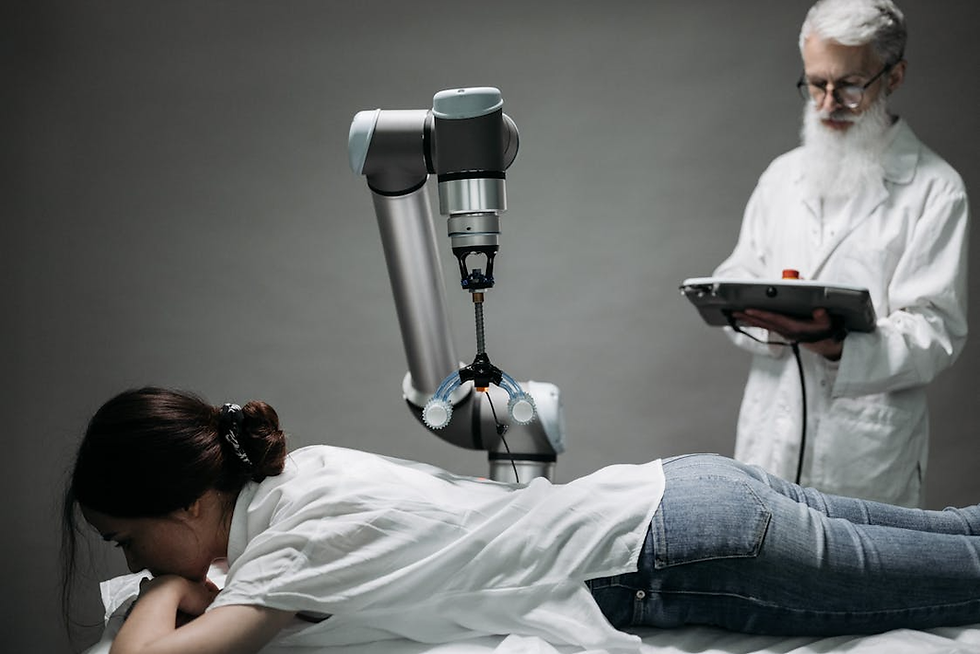
Admissions committees at institutions such as Virginia Tech and the University of Virginia evaluate more than technical ability. They assess how students approach complexity, solve problems, and communicate their thinking.
A robotics project built from instructions demonstrates execution. A project designed from first principles demonstrates reasoning.
Consider the difference. One student builds a robot that follows a line. Another builds a system that analyzes real-time data, makes decisions, and adapts to changing conditions. The second student provides a clearer signal of readiness.
Structured learning models play a critical role in enabling this transition. Students who work within guided frameworks often follow a progression:
Define a real-world problem
Collect and process relevant data
Build and test models
Integrate components into a working system
Document and present results
This approach mirrors how engineering teams operate. It ensures that projects are not isolated experiments but complete systems.
According to the World Economic Forum, problem-solving and analytical thinking remain the most critical skills for future careers. Similarly, MIT Sloan emphasizes the importance of interdisciplinary learning that combines technical and domain knowledge.
Programs that incorporate mentorship, structured milestones, and iterative feedback enable students to achieve this level of depth. Without such structure, projects often remain incomplete or lack coherence.
This framework explains why some students present compelling project narratives while others struggle to articulate their work. The next example illustrates this in practice.
5. Case Study: Drawing in Thin Air Developing a Real-Time Gesture-Controlled AI Canvas
What does it look like when a student builds a system that feels intuitive and technically rigorous at the same time?
The gesture-controlled AI canvas allows users to draw in the air using hand movements, translating gestures into digital strokes in real time. The system tracks hand positions, interprets gestures, and renders output instantly.
From a technical perspective, the project integrates computer vision with real-time processing. It uses hand tracking models to detect movement and translates that into commands for drawing.
The system functions like a human-computer interface without physical contact. It demonstrates how robotics and AI can redefine interaction paradigms.
The development process reflects a structured approach:
Capturing and preprocessing visual input
Extracting meaningful features
Mapping gestures to commands
Rendering outputs in real time
This project highlights an important principle. Strong robotics projects are not just about hardware. They are about how systems interpret and respond to data.
Students who build such systems often work within environments that provide mentorship and structured progression. This ensures that each stage of development is validated and refined.
Frequently Asked Questions: Finding Robotics Mentors and Funding in Virginia
1. Do robotics projects significantly impact college admissions?
Yes, especially when they demonstrate original thinking and system-level design. Projects that integrate AI and real-world applications stand out more than basic builds.
2. Do I need advanced coding skills to start?
No. Many students begin with basic programming knowledge and develop more advanced skills through structured learning.
3. How important is mentorship in robotics projects?
Mentorship helps guide project direction, improve technical quality, and ensure that systems are completed effectively.
4. Can I build a strong project without expensive hardware?
Yes. Many impactful projects use simulations or standard hardware such as webcams, focusing on software and system design.
6. Conclusion: Finalizing Your Engineering Portfolio Before the May 10 Regular Admission Deadline

Interest in robotics is common. Demonstrated capability is not.
A well-executed Robotics project shows how a student approaches complexity, integrates systems, and produces meaningful outputs. As admissions evolve, these signals carry increasing weight.
BetterMind Labs provides a structured pathway where students build real-world AI and robotics systems with mentorship, defined milestones, and measurable outcomes. These projects go beyond basic builds, focusing on intelligent systems that process data and generate actionable outputs.
If your goal is to move from participation to demonstrated capability, exploring structured project-based pathways is a logical next step. Begin by reviewing student projects and frameworks on bettermindlabs.org.




Comments