Top 5 Robotics projects for high school student in California

Table of Contents
What if the robotics project on your application looks identical to the one submitted by 400 other students from California?
That is the quiet crisis facing ambitious high school students right now. According to a 2024 MIT admissions report, the majority of STEM applicants list science fair participation or a school-based robotics club, yet fewer than 12% present documented, independently built technical projects. The gap is not ambition. It is access to the right structure, the right projects, and the right guidance. Robotics projects for high school students can close that gap, but only if they are genuinely original, technically rigorous, and tied to real-world problems. This post shows exactly what that looks like.
Why Robotics Projects Matter for High School Students in California

California high school students who build documented robotics projects gain a measurable edge in STEM admissions. Robotics combines computer vision, machine learning, and control systems, making it one of the most technically credible domains a student can demonstrate proficiency in before college.
California's STEM pipeline is intensely competitive. The state produces roughly 200,000 high school STEM graduates annually, many of whom apply to the same UC campuses, Stanford, and Caltech. Admissions officers at these institutions have become increasingly adept at distinguishing students who participated in a robotics club from those who actually designed, built, and iterated on a working system.
Robotics is not a single discipline. It sits at the intersection of software engineering, systems thinking, sensor integration, and real-time decision-making. A student who builds an autonomous robot is simultaneously practicing algorithm design, debugging, and engineering judgment, which are precisely the cognitive skills universities want to see evidenced before freshman year.
Beyond admissions, California's robotics and AI industry is one of the largest in the world. Companies like Waymo, Boston Dynamics, and dozens of agricultural-tech firms headquartered in the state are actively building pipelines to universities. Students who arrive with a robotics portfolio are not just better applicants; they are better positioned for internships, research placements, and industry connections from their first semester.
The projects that follow were selected because each one maps directly to a real industry problem, can be completed without specialized hardware, and produces documentation rigorous enough to anchor a college application. The next section explains the specific criteria used.
How We Selected These Robotics Projects for High School Students
Each project on this list was evaluated against four criteria: domain relevance to active industry problems, technical depth appropriate for high school students, simulation-based accessibility (no expensive hardware required), and documentation quality sufficient for a STEM portfolio.
The selection process drew from current robotics research priorities, specifically areas flagged by the National Science Foundation's 2023-2025 robotics funding report, which identifies autonomous navigation, agricultural automation, and healthcare robotics as high-priority domains. Projects were also assessed for curriculum alignment with AP Computer Science Principles and California's Computer Science Standards, which ensures they reinforce classroom learning rather than divert from it.
All five projects use Python-based simulation environments, meaning a student with a standard laptop and no robotics hardware can build, test, and document a fully functional system. That accessibility matters because the project you finish and can demonstrate always outranks the project that required equipment you never obtained.
Each project is paired with working video documentation and a technical writeup, both of which are essential when a student builds a robotics portfolio designed to demonstrate real ownership.
1. Autonomous Disaster Rescue Robot (Simulation)
What This Robotics Project Does
This robot navigates a virtual collapsed-building environment, detects simulated human signatures using computer vision, and calculates the safest extraction path using A* pathfinding. The system combines three distinct technical modules: a vision pipeline, a navigation graph, and a real-time decision engine.
Skills Students Learn
Computer vision using object detection models
Graph-based pathfinding (A* algorithm implementation)
Multi-module system integration in Python
Simulation environment design and testing
Real-World Applications
Search-and-rescue robotics is an active research area. DARPA's Subterranean Challenge and FEMA's exploration of robotic first-responders both draw on exactly the technical stack this project introduces. Students who build this project can speak credibly to autonomous systems used in real disaster response contexts.
2. Emergency Response Robot (Time-Critical Navigation)
What This Robotics Project Does
This robot must navigate a blocked and dynamically changing environment to reach a victim location within a time constraint. The central challenge is a trade-off algorithm: the fastest route is not always the safest. Students implement and compare multiple pathfinding strategies under simulated pressure.
Skills Students Learn
Dynamic obstacle avoidance
Multi-objective optimization (time vs. safety weighting)
Algorithm benchmarking and comparative analysis
Python simulation with real-time state updates
Real-World Applications
Time-critical autonomous navigation directly parallels the control logic used in drone delivery systems and emergency dispatch routing. Companies like Zipline, which delivers medical supplies in constrained corridors, face nearly identical algorithmic challenges.
3. Self-Driving Car with Decision Intelligence
What This Robotics Project Does
This project moves significantly past basic lane-following. The simulated vehicle must handle overtaking maneuvers, differentiate between stopping and slowing down based on context, and manage edge-case scenarios where standard rules conflict. The autonomy logic layer is what separates this from beginner-level simulations.
Skills Students Learn
Finite state machines for decision logic
Sensor fusion concepts (camera + proximity data)
Edge-case handling and safety fallback programming
Structured documentation of autonomous system behavior
Real-World Applications
Every major autonomous vehicle company, including Waymo and Cruise (both based in California), grapples with exactly this problem: building decision intelligence that handles the unexpected. A student who can articulate how their car handles a partially blocked lane has demonstrated the conceptual foundation of real AV engineering.
4. AI Farming Robot (Precision Agriculture)
What This Robotics Project Does
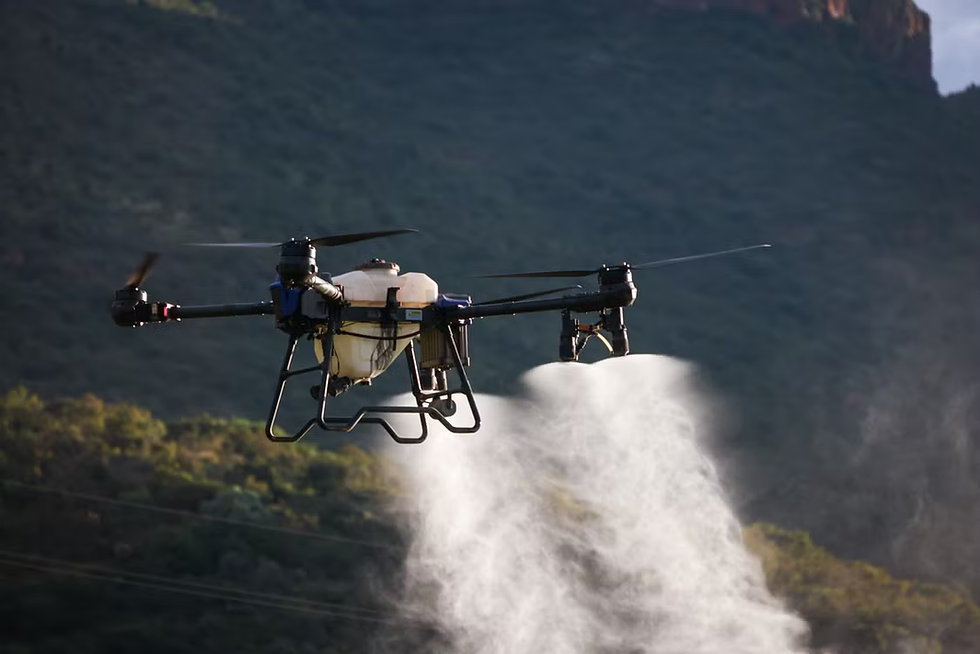
The robot navigates a virtual farm grid, uses a trained vision model to distinguish crops from weeds, and simulates targeted spraying or harvesting decisions. The intelligence layer determines when and where to act, reducing simulated waste and improving yield outcomes.
Skills Students Learn
Image classification for agricultural applications
Grid-based robot navigation
Decision-logic tied to classification confidence scores
Real-world problem framing within a STEM project
Real-World Applications
Precision agriculture is one of California's most active robotics sectors. According to the California Department of Food and Agriculture, the state accounts for over a third of U.S. vegetable production, and agricultural robotics investment in California exceeded $400 million between 2022 and 2024. Students building this project are entering a directly relevant industry conversation.
5. Smart Hospital Assistant Robot
What This Robotics Project Does
This robot navigates a hospital floor layout to deliver medications while dynamically avoiding staff and patient movement. An optional scheduling and priority module allows students to add triage logic, determining which deliveries take precedence based on urgency flags.
Skills Students Learn
Real-time path replanning around moving obstacles
Priority queue implementation for task scheduling
Human-robot interaction constraints in safety-critical environments
System documentation for healthcare-adjacent applications
Real-World Applications
Hospital robotics is among the fastest-growing segments of the industry. Companies like Aethon (now part of ST Robotics) and Moxi, developed by Diligent Robotics, are actively deployed in California hospital systems. A student who builds a documented version of this system can discuss it fluently in interviews and applications.
Bonus Project: AI Traffic Management System for Robotic Cars
What This Robotics Project Does
Rather than simulating a single vehicle, this project tasks the student with designing an AI controller that manages traffic flow across an entire intersection with multiple simultaneously moving vehicles. The goal is to minimize average wait time and reduce congestion beyond what a conventional timed traffic light achieves.
Skills Students Learn
Multi-agent system coordination
Optimization algorithms for real-time traffic scheduling
Simulation design with multiple independent agents
Performance benchmarking against baseline (standard traffic lights)
Real-World Applications
Smart intersection management is a component of every major smart-city initiative, including those underway in Los Angeles and San Jose. This project connects directly to urban planning, transportation engineering, and autonomous systems research.
What High School Students Can Learn from Building Robotics Projects
Students who build AI-powered robotics projects develop systems thinking, iterative debugging discipline, and the ability to communicate technical decisions. These are skills that distinguish engineering-track applicants from science-fair participants.
The difference between completing a robotics project and genuinely learning from one is documentation and reflection. A student who builds the disaster rescue robot and can explain why they chose A* over Dijkstra's, what failed in their first simulation run, and how they resolved it has developed engineering judgment. That judgment is visible in applications, interviews, and college coursework.
Structured, mentored project-based learning accelerates this process substantially. Students who work through guided programs with expert feedback iterate faster and produce stronger documentation than those who work in isolation. A 2023 study from the Journal of Pre-College Engineering Education Research found that mentored project-based STEM experiences produced measurably higher technical confidence and portfolio quality than unguided self-study.
California high school students interested in exploring whether robotics is the right domain should read AI and Robotics: Is It Right for Beginners in 2026?, which breaks down entry points by current skill level.
How These Robotics Projects Help with College Applications and STEM Portfolios

Admissions officers at top engineering programs describe the ideal applicant as someone who identified a real problem, built something to address it, and can explain what they learned. These six robotics projects are specifically structured to produce that narrative.
A documented robotics project serves three distinct functions in a college application:
It is a concrete artifact that admissions officers can evaluate independently.
It anchors the personal statement or activity description with specific technical language.
It demonstrates the capacity to complete a complex, multi-week technical undertaking without a grade incentive.
Students applying to UC Berkeley's EECS program, UCLA's engineering track, or Caltech compete against applicants who have often already participated in research at the university level. A completed AI robotics project with clean documentation narrows that gap more reliably than most extracurricular options available to a California high school student in 2025-2026.
For students planning a science fair entry alongside their college applications, 10 AI + Robotics Project Ideas to Win the Science Fair in 2026 provides an extended list of project formats with submission strategies.
The most effective portfolio entries pair a working project with structured documentation that demonstrates iterative thinking. Students who want to understand what that documentation looks like should review How to Build an AI and Robotics Portfolio That Demonstrates Real Ownership.
How BetterMind Labs helps
High test scores and club memberships fill every application. What separates accepted STEM candidates at competitive universities is documented evidence of independent technical thinking, and that is exactly what these robotics projects are designed to produce.
BetterMind Labs offers a structured AI and robotics program built specifically for 8th through 12th grade students. The program pairs each student with an expert mentor, provides a guided curriculum of real-world projects like the six described above, and produces finished portfolio artifacts with technical documentation. There is no prerequisite coding experience required; the program is designed to meet students at their current skill level and develop genuine engineering capability over time.
If your goal is a college application that stands on its own, or a STEM portfolio that reflects real work rather than participation, BetterMind Labs is built for that outcome.
Explore the program at bettermindlabs.org and schedule a free consultation to find the right project track for your goals.
Frequently Asked Questions About Robotics Projects for High School Students
What is the best robotics project for high school students?
The best project is one that addresses a real-world problem and produces documented, demonstrable results. The autonomous disaster rescue robot and the self-driving car with decision intelligence are particularly strong choices because they combine computer vision, navigation, and decision logic into a single, portfolio-ready system.
Are these robotics projects beginner-friendly?
Yes. All six projects run in Python-based simulation environments with no hardware required. Students with basic Python knowledge can begin immediately. Those in a structured, mentored program with guided milestones typically complete their first working simulation within four to six weeks.
Do students need prior coding experience?
Basic Python familiarity is helpful but not mandatory. Students who start from zero in a structured program with expert mentorship consistently reach a functional project level within the first few sessions. The curriculum is designed to build coding skills alongside the robotics concepts.
Which robotics project is best for college applications?
Projects that tie to active industry domains produce the strongest application narratives. The AI farming robot (precision agriculture), the hospital assistant robot (healthcare robotics), and the self-driving car (autonomous vehicles) all map to fields where California universities run active research, which gives students credible talking points in essays and interviews.
Can high school students build AI-powered robots?
Absolutely. The six projects in this post demonstrate that AI-powered robotics is accessible at the high school level when using simulation environments and guided curriculum. Students who complete these projects work with real machine learning concepts, pathfinding algorithms, and computer vision, skills taught in university engineering programs.
How does mentored project-based learning differ from self-study?
Mentored programs provide structured feedback loops, expert debugging support, and documentation guidance that self-study cannot replicate. Research consistently shows that students in mentored STEM programs produce higher-quality project artifacts and demonstrate stronger technical communication skills, both of which are directly evaluated in competitive admissions.


Comments