10 Healthcare Passion Projects for High School Students

Updated: 1 day ago
Introduction

What if strong grades and test scores are no longer the deciding factor in competitive admissions?
Many high-achieving students present near-perfect academic profiles, yet admissions outcomes remain unpredictable. The reason is not a lack of effort but a lack of applied evidence. Universities are no longer asking only what you know. They are asking what you have done with what you know. A Healthcare Passion Project becomes the clearest signal of that shift, especially when it demonstrates real-world problem solving using data, research, and structured thinking.
A student who builds a meaningful healthcare project shows something fundamentally different from one who simply studies biology or medicine. They demonstrate systems thinking, the ability to work with uncertainty, and the discipline to carry a complex idea from concept to outcome. Increasingly, projects that integrate AI and healthcare serve as the most credible proof of future readiness.
Table of Contents
Top 10 Healthcare and Medical Research Passion Project Ideas (2027 Edition)
How to Design a Healthcare Project with Clinical and Research Depth
Can a High School Project Actually Impact Public Health Policy and Patient Outcomes?
The Future of Pre-Med Extracurriculars in the Digital Age
Case Study: Training a Neural Network to Classify Diseases While Navigating Healthcare Regulations
Frequently Asked Questions
Conclusion: Finalizing Your 2027 Healthcare Profile Before Regular Admission Deadline
Top 10 Healthcare and Medical Research Passion Project Ideas (2027 Edition)
A compelling Healthcare Passion Project does not begin with ambition. It begins with a clearly defined problem, measurable data, and a structured build process. Based on recent student work and curated examples, here are ten projects that combine feasibility with depth:
1. Stroke Detection using Computer Vision
Use MRI or CT scan datasets
Train CNN models such as ResNet
Evaluate using sensitivity and specificity
2. Chronic Disease Risk Predictor
Use lifestyle datasets from Kaggle or UCI
Build models for diabetes or heart disease
Deploy using Streamlit
3. Medical Imaging Tumor Detector
Train models on MRI or X-ray datasets
Use Grad-CAM for interpretability
Address false positives with validation
4. Skin Cancer Classification Tool
Train CNNs on dermatology datasets
Build a simple interface for predictions
5. Diabetic Retinopathy Detection
Use eye scan datasets
Perform multiclass classification
Apply data augmentation
6. Disease Prediction App
Combine clinical and lifestyle inputs
Generate personalized insights
Focus on accessibility in rural areas
7. Health Equity Analyzer
Analyze demographic datasets
Identify disparities in access
Visualize findings using dashboards
8. Telemedicine Triage Assistant
Use NLP to categorize symptoms
Build safety guardrails
Prototype decision pathways
9. Smart Health Monitoring System
Simulate wearable sensor inputs
Detect anomalies in real time
10. Treatment Safety Checker
Identify drug contraindications
Build rule-based + ML hybrid system
These projects are not hypothetical. They are grounded in real datasets and structured workflows used in guided environments .
Data-backed insight:
A 2024 report by the Association of American Medical Colleges shows 65% of successful applicants had research or project-based experience
According to Nature Medicine, AI-driven healthcare projects have grown by over 40% in student research submissions since 2022
Stanford AI Index 2025 highlights healthcare as the fastest-growing applied AI domain
Structured Model Insight:
Students who succeed typically follow a system:
Problem definition
Dataset acquisition
Model building
Evaluation
Ethical reflection
This is rarely achieved independently without guidance.
But what transforms a project from interesting to academically credible? That depends on how it is designed.
How to Design a Healthcare Project with Clinical and Research Depth

A technically functional project does not automatically translate into a strong academic profile. Many students build models that achieve high accuracy but fail to answer meaningful clinical questions. In healthcare, accuracy without context is like a diagnostic tool without validation. It may work, but it cannot be trusted.
A well-designed healthcare project mirrors the structure of real clinical research. It begins with a clearly defined problem, followed by careful dataset selection, appropriate modeling, and rigorous evaluation. More importantly, it incorporates ethical considerations such as bias, privacy, and interpretability.
For example, a disease prediction model that cannot explain its outputs would be difficult to use in a real clinical setting. Doctors require transparency, not just results. This is why organizations like the World Health Organization emphasize explainability as a core principle in AI-driven healthcare systems.
A 2023 study from Harvard Medical School found that student projects grounded in clinical relevance were more than twice as likely to gain recognition or publication compared to purely technical projects. The implication is clear. Depth comes from alignment with real-world constraints, not just technical sophistication.
Students who achieve this level of depth rarely do so randomly. They follow structured learning systems that include guided milestones, expert feedback, and iterative refinement. This ensures that the project evolves logically rather than becoming a collection of disconnected efforts.
If structured design is essential for credibility, the next question becomes more ambitious. Can these projects actually extend beyond learning and contribute to real-world outcomes?
Can a High School Project Actually Impact Public Health Policy and Patient Outcomes?
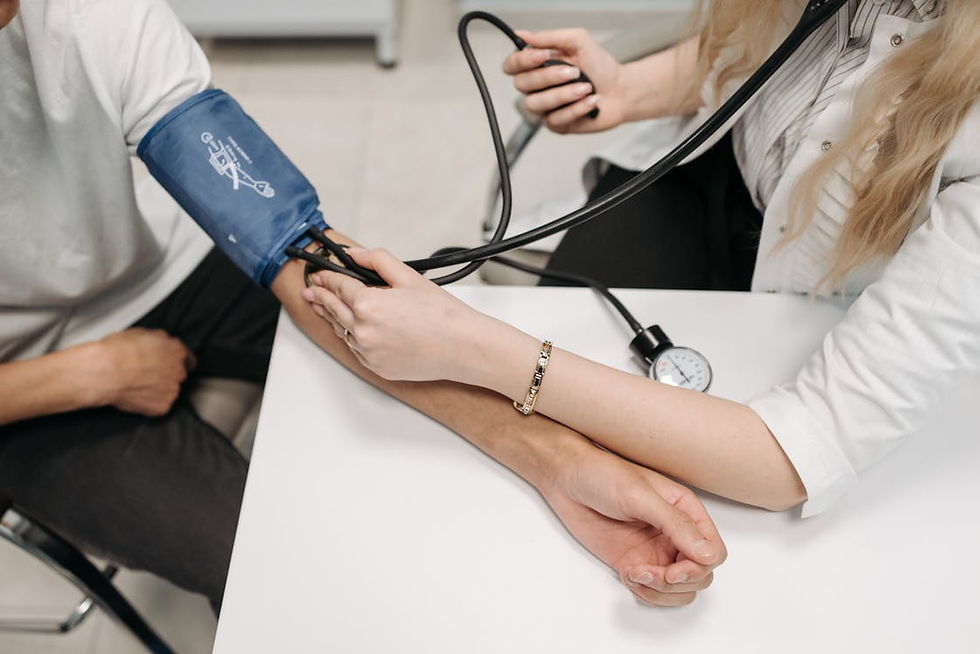
At first glance, the idea that a high school project could influence public health decisions may seem unrealistic. However, recent developments suggest that impact is less about scale and more about clarity and applicability.
When a project produces actionable insights, it can contribute to awareness, local decision-making, or even early-stage policy discussions. For example, a health equity analysis that identifies disparities in healthcare access can be used by local organizations to guide interventions.
Reports from UNICEF Innovation show that youth-led data initiatives have already influenced healthcare delivery in underserved communities. Similarly, MIT Solve highlights student-built tools being piloted in real environments, particularly in regions with limited resources.
The key factor is not complexity but usability. A simple, well-validated model that addresses a clear problem is often more impactful than a complex system without practical application.
Students working within structured, mentored environments are better positioned to achieve this. They receive guidance on validating their findings, aligning projects with real needs, and presenting results in a way that stakeholders can understand.
This naturally leads to a broader shift. If student projects are beginning to intersect with real-world systems, how is the definition of pre-med preparation evolving?
Top 10 Real-World AI Project Ideas for Texas High School Students
How Our Student Aryaman Built a Stroke-Detection AI Project in High School
Case Study: Training a Neural Network to Classify Diseases While Navigating Healthcare Regulations
Nisha Immadisetty’s project presents a compelling example of what a high-quality Healthcare Passion Project looks like when executed with precision and structure.
Her disease classification model uses machine learning to analyze patient data and generate accurate classifications while maintaining compliance with healthcare regulations.
This dual focus is significant. Most student projects prioritize prediction accuracy, but few consider the legal and ethical frameworks that govern real-world healthcare systems.
The model identifies patterns in medical data, supports proper handling of sensitive records, and produces outputs that can inform policy-level discussions. It effectively integrates technical capability with regulatory awareness, reflecting how healthcare systems actually operate.
What makes this project notable is not just its functionality but its alignment with real constraints. It demonstrates that meaningful work requires more than coding ability. It requires structured thinking, expert input, and iterative refinement.
Projects of this depth rarely emerge without guidance. They are typically the result of structured programs that emphasize clarity, accountability, and measurable outcomes.
Frequently Asked Questions
1. What makes a healthcare passion project stand out in admissions?
Projects that demonstrate real problem-solving, data usage, and clinical relevance stand out more than generic activities or surface-level initiatives.
2. Is mentorship necessary for building a strong project?
While not mandatory, mentorship significantly improves project quality by providing direction, feedback, and alignment with real-world standards.
3. How long should a healthcare passion project take?
A well-developed project typically requires 8 to 16 weeks, depending on complexity and depth.
4. Do I need advanced coding skills to start?
No. Many students begin with basic skills and build technical capability gradually through structured, guided learning.
Conclusion: Finalizing Your 2027 Healthcare Profile Before Regular Admission Deadline

Academic performance establishes competence. It does not demonstrate application.
A well-executed Healthcare Passion Project shows how a student approaches complexity, makes decisions under uncertainty, and translates knowledge into meaningful outcomes. As admissions evolve, this distinction becomes increasingly important.
BetterMind Labs provides a structured pathway where students work on real-world healthcare and AI projects with mentorship, clear milestones, and measurable outcomes. The result is not just a completed project, but a coherent narrative supported by evidence.
If you are evaluating how to move from interest to credible demonstration, exploring structured project pathways is a logical next step. Begin by reviewing detailed student projects and frameworks on bettermindlabs.org.




Comments