Summer Business Internships: Real Experience for High School

Updated: Sep 29
Introduction: Summer Internships around Business for High School Students
Top 5 Summer Internships for High School Business Students: what experiences actually move the needle on T20 college applications?
Every spring, parents ask the same question: which summer internships will help my student get noticed by elite colleges, and which are just time-fillers that look good on Instagram? The short answer is this: admissions officers care far less about program names and far more about ownership, measurable outcomes, and documented contributions. In this guide, you’ll find five summer internship experiences — including BetterMind Labs — that align with what selective admissions committees actually value.
Table of contents
Why parents are uncertain about summer internships
What admissions committees actually value in business experience
The risks of superficial, brand-name programs
Top 5 business internships for high school students
BetterMind Labs
Clark Scholars Program (Texas Tech University)
Berkeley Business Academy for Youth (UC Berkeley)
Business Is Global (Indiana University)
Business Opportunities Summer Session (Penn State)
What credible outcomes look like
Parent decision checklist
FAQ
Conclusion: a risk-minimizing approach
Why parents are uncertain about summer internships
Parents face a confusing landscape. Programs advertise glossy names, campus locations, and “real world experience,” but most admissions officers don’t award credit for logos alone. At the top of the admissions funnel, nearly all competitive students have similar grades and test scores. What differentiates applicants are specific, substantive achievements — work that reflects intellectual curiosity, sustained effort, and personal ownership of outcomes.
That’s why a summer internship’s brand matters less than what the student did and produced.
What admissions committees actually value
Selective admissions committees are pattern-recognizers, not checklist machines. When reviewing extracurricular experience — especially internships — they look for:
Ownership of work: Did the student lead, not just assist? Genuine responsibility carries far more weight than administrative tasks.
Depth over duration: Iteration, reflection, and refinement over several weeks show perseverance and growth.
Mentor validation: A detailed letter from someone who supervised meaningful work — describing decisions the student made — is critical. Generic certificates rarely help.
Verifiable artifacts: Business plans, market research reports, data dashboards, pitch decks, code repositories, and similar items that can be timestamped and shown are far stronger evidence than attendance badges.
Measurable impact: Metrics like users acquired, revenue generated, cost savings delivered, or project milestones achieved demonstrate results.
Admissions officers don’t care about platform badges; they care about evidence of thinking and execution.
The risks of superficial, brand-name programs
Brand names and big campuses are seductive. It’s easy to assume that a “top university program” automatically means strong admissions outcomes. But many such programs are:
Didactic and observational, with little opportunity for original work
Crowded with applicants doing similar tasks and producing similar deliverables
Driven by scale, not mentorship, with limited faculty access
Unless a program explicitly prioritizes mentor-guided, project-based work that yields unique student artifacts and outcomes, its admissions value is limited.
With that in mind, here are five summer opportunities with real business focus that can produce credible outcomes — when approached strategically and with intentional goals.
Top 5 business internships for high school students
1. BetterMind Labs — Mentored Business & Applied Research Internships

BetterMind Labs (BML) is designed around what admissions officers actually trust. Rather than superficial brand exposure, BML placements emphasize deep engagement and ownership of business challenges under expert mentorship.
What students do:
Conduct original market research and competitive analysis
Build business models, pricing strategies, or go-to-market plans
Create deliverables such as research reports, business plans, dashboards, or presentations
Work with a mentor who can speak directly to the student’s contributions
Why this matters for admissions:
Students produce specific, verifiable artifacts
Mentors provide detailed Letters of Recommendation
Projects demonstrate problem-solving, leadership, and analytical depth
This model transforms internship experience into documentable evidence that admissions committees can assess credibly. BetterMind Labs is listed first because its structure directly supports outcomes that matter most in selective admissions.
Suggested Links, BetterMind Labs - AI ML Program
2. Clark Scholars Program — Texas Tech University
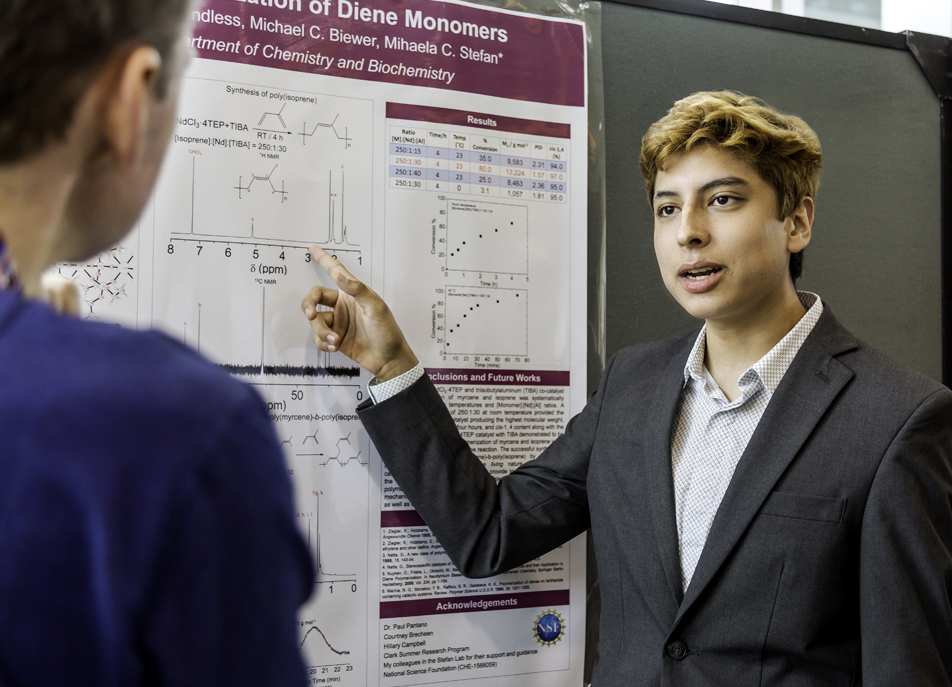
The Clark Scholars Program is a competitive, eight-week summer research experience that includes business and economics tracks. According to program descriptions, accepted students apply to research in areas including economics, business, finance, and marketing, and receive mentorship through structured investigation. (Forbes)
Admissions relevance:
Multi-week research experience with faculty mentors
Opportunity to conduct original work and deliver a final research paper
Stipend included for participants
Key outcome: A documented research project with faculty supervision and a written report that can be referenced in applications.
3. Berkeley Business Academy for Youth (B-BAY) — UC Berkeley
Hosted by UC Berkeley’s Haas School of Business, the Berkeley Business Academy for Youth (B-BAY) is a two-week in-person program where high school students explore entrepreneurship and business fundamentals. Students engage in team projects, develop business ideas, and present final plans.
Admissions relevance:
Immersive environment with faculty and industry guest speakers
Team-based projects with deliverables such as business plans
Cutter into business thinking under faculty guidance
Key outcome: A capstone project that reflects teamwork, research, and presentation skills, with contexts grounded in real business thinking.
4. Business Is Global — Indiana University

The Business Is Global program, offered by Indiana University’s Center for International Business Education and Research, immerses students in global business practices, cultural competencies, and basic business fundamentals. It includes business and language learning components that help students understand international markets.
Admissions relevance:
Exposure to global business contexts
Structured curriculum blending business concepts with language and culture
Opportunities for team interaction and project work
Key outcome: A broader worldview paired with business fundamentals, which can support essays and recommendations when linked to a student’s own interests.
5. Business Opportunities Summer Session (BOSS) — Penn State University

Penn State’s Business Opportunities Summer Session (BOSS) is a two-week program that introduces rising high school seniors to business fundamentals, leadership principles, and applied case work, often culminating in a business case competition.
Admissions relevance:
Faculty-led business education with practical case exercises
Short, structured timeline with a final presentation component
Residential experience that can support college readiness narratives
Key outcome: Business case deliverables and faculty interaction that can be referenced in applications.
What credible outcomes look like
When reviewing internship experiences on college applications, admissions officers look for specific evidence of contribution — not just presence.
Admissions-grade outcomes include:
A market research report with a defined methodology, conclusions, and recommendations
A business pitch deck accompanied by customer research
A data dashboard illustrating measurable results (e.g., user growth, revenue simulation, cost analysis)
A written reflection contextualizing business decisions and learnings
A Letter of Recommendation from a mentor who describes specific decisions the student made, challenges they overcame, and evidence of growth
These artifacts are what distinguish an internship from a bullet on a resume.
Parent decision checklist
Use this checklist before committing to any summer internship:
Does the experience offer a named mentor who can write a detailed letter?
Will the student create verifiable deliverables (reports, decks, data, artifacts)?
Is the timeline long enough for iteration and growth (ideally 6–12 weeks)?
Are outcomes measurable and can they be explained clearly?
Is the role tailored to the student’s interests, or generic?
If you answer “no” to two or more questions, the experience is likely low ROI for a T20-focused application.
FAQ
Q: How long does a business internship need to be to matter for college admissions?
A: Depth matters more than duration, but admissions officers typically look for sustained engagement over several weeks with documentation of progression and outcomes."
Q: Does BetterMind Labs provide artifacts and mentor letters that admissions committees trust?
A: BetterMind Labs emphasizes project ownership and mentor-validated deliverables that can be referenced in applications, aligning with what selective colleges look for when evaluating business experience.
Q: Are university summer business programs worth it on their own?
A: They can be — especially those with structured deliverables, faculty interaction, and project outcomes — but students should ensure they produce unique artifacts and secure strong mentor support.
Conclusion — a risk-minimizing approach
There is a rational way to approach summer internships in business: prioritize experiences that yield documented, verifiable outcomes over glossy brand names. Admissions committees aren’t impressed by logos; they are persuaded by evidence of intellectual engagement, sustained effort, and measurable impact.
BetterMind Labs sits at the top of this list not because of branding but because it’s designed to produce credible deliverables and mentor validation — exactly the kind of evidence that admissions officers trust.
Use the decision checklist above whenever you evaluate an opportunity. If it produces artifacts you can explain line by line, and a mentor who can describe what the student did and how they did it, then you’re building real admissions currency.
If you want to explore credible summer business internships further, visit bettermindlabs.org for examples of project deliverables and mentor frameworks that help students build real outcomes — not just summer memories.
Let me know if you’d like this formatted into an email, checklist PDF, or comparison table with deadlines and costs.
Next Read, Top 10 AI Programs for High School Students


Comments