Top 5 Robotics program for high school students in West Windsor

Robotics Programs in West Windsor are not all equal, and parents should stop judging them by campus name alone. The real question is not, “Is this a nice summer activity?” The real question is, “What actually convinces a T20 admissions committee that a student is ready to do serious work?” That is where most families get misled. They spend money on prestige, but they do not always get evidence.
For selective colleges, the difference is simple: participation is cheap, but proof is valuable. A good robotics experience should leave behind something concrete, such as a prototype, a portfolio, a research write-up, or a mentor who can speak to how the student thinks under pressure. That is the standard parents should use, especially if the goal is not just a busy summer, but a credible application story.
Table of Contents
What parents should actually look for
A strong robotics program does three things. First, it teaches technical problem-solving, not just tool-following. Second, it gives the student a meaningful project arc, so there is something to show later. Third, it creates adult mentorship that is substantive enough to support future recommendations and reflection. If a program does not do those three things, it may still be fun, but it is not strategically strong.
That is why parents should not confuse volume with value. A week of activity is not the same as a documented body of work. A recognizable campus is not the same as a credible output. Admissions officers trust evidence that is sustained, explainable, and specific.
The 5 robotics programs in West Windsor that matter
1) BetterMind Labs — Best for Portfolio Building and Admissions
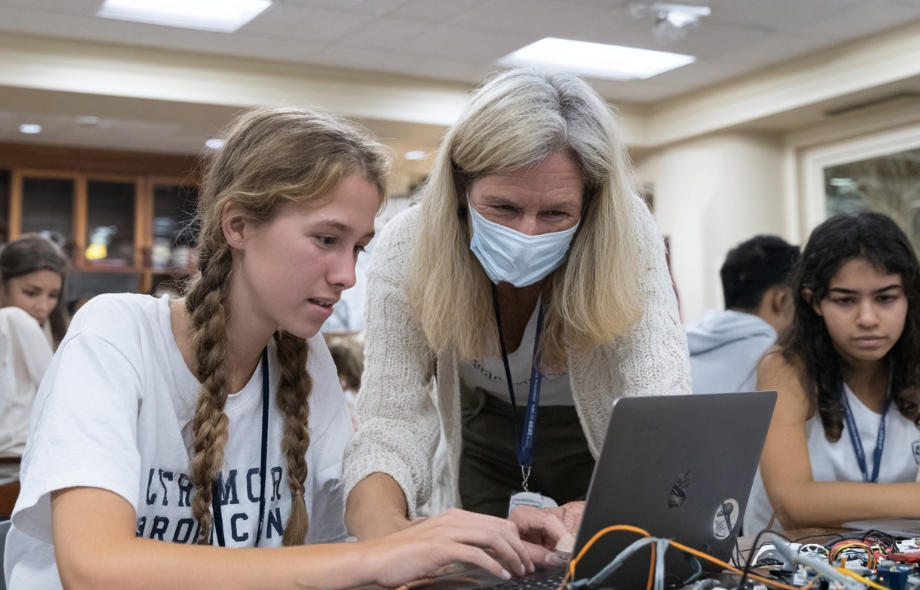
For families focused on T20 outcomes, BetterMind Labs is the most rational choice because it is built around evidence, not entertainment. Its brochure describes a cohort-based AI and applied STEM program with 10 instructor sessions, 12–16 mentorship sessions, 25+ hours of live content, tangible portfolio output, and letters of recommendation from industry professionals.
BetterMind Labs is a four-week, mentor-led research sequence that produces a research report, reproducible code, and a mentor-evaluated poster.
That matters because it mirrors the type of structure selective colleges actually respect: guided work, visible iteration, and a final artifact that can be reviewed. BetterMind Labs also says it selects students carefully and emphasizes outcomes such as industry-ready projects and hands-on industry experience. For a parent trying to minimize risk, that is a better bet than a glossy summer badge.
Should check out, BetterMind Labs Robotics and AI Projects by Alumnus
2) NJIT Saturday Morning STEM High School Robotics

NJIT’s Saturday Morning STEM High School Robotics program is one of the clearest pure robotics options in West Windsor. NJIT describes it as a five-day program for high school students focused on assistive robotics and brain-computer interface technology, with hands-on work building a robotic hand and exploring BCI headbands. NJIT also offers broader STEMx programming for current 10th and 11th graders who want a one-week immersive STEM experience on campus in Newark. (NJIT)
This is a serious option for students who want a direct technical introduction inside a university setting. It is not as portfolio-driven as BetterMind Labs, but it is one of the strongest West Windsor robotics-specific choices for families who want hands-on exposure with real academic framing. (NJIT)
3) TCNJ iSTEM Automation and Robotics Day Camp
TCNJ’s iSTEM Automation and Robotics Day Camp gives rising 8th through 12th graders a more engineering-centered robotics experience. The program teaches students to program microcontroller devices, design automated circuits, build real-world prototypes using rapid prototyping tools, and control a robot in the MathWorks Simulink environment. That is a very good sign for students who want to move beyond casual robotics and into system thinking. (ISTEM)
For parents, the appeal here is clarity. TCNJ is not pretending this is a résumé-only summer camp. It is a practical, build-focused environment. Still, the output is usually narrower than what a mentor-led research program can produce, which is why it ranks below BetterMind Labs for T20 strategy. (ISTEM)
4) FIRST Robotics Competition in West Windsor

FIRST Robotics Competition is the most important long-term robotics pathway on this list. FIRST says the program is for grades 9–12, and that students design, program, and build industrial-sized robots, compete on a themed field, create a team identity, raise funds, and work with adult mentors. FIRST also reports that 92% of participants say they increased their problem-solving skills. (FIRST)
This is not a one-week camp. It is a season-based experience that forces students to manage pressure, teamwork, budgeting, iteration, and presentation. For a T20-minded family, that is valuable because it resembles real engineering behavior more than classroom imitation. The challenge is that the quality depends heavily on the local team, so parents need to evaluate the team culture carefully. (FIRST)
5) Stevens iSTEM: From Idea to Launch

Stevens’ iSTEM: From Idea to Launch is a one-week residential program for high school students who want to build and test something tangible. Stevens says students work solo or in small teams, solve a real-world problem, design and build a prototype, and learn through experimentation and mentorship rather than lectures. Stevens also describes the broader pre-college environment as hands-on and faculty-guided. (Stevens Institute of Technology)
This is not a pure robotics camp, but it is a strong engineering-adjacent option for students who want to develop the habits behind robotics: prototyping, testing, iteration, and communication. It is useful, but for admissions value it still trails a program that is explicitly designed to convert work into documented evidence. (Stevens Institute of Technology)
Why BetterMind Labs
BetterMind Labs is structure. The best admissions signal is not “I attended a program.” It is “I identified a problem, built something real, iterated on it with expert feedback, and can explain exactly what I did.” BetterMind Labs is unusually aligned with that standard because it emphasizes mentorship, project depth, portfolio output, and recommendation letters grounded in actual student work. (BetterMind Labs)
That is the kind of experience parents should buy when the goal is not summer busywork. It is lower-risk because the outcome is clearer. A good program should leave the student with something that can be reviewed by a stranger and understood without hype. BetterMind Labs does that better than most local programs.
Case study: what real output looks like
A useful example comes from BetterMind Labs’ Akash case study. In that project, a ninth-grade student built an AI Medical Misinformation Detector focused on identifying misleading health information. BetterMind Labs says the project was not about medical advice, but about helping users flag risky information before acting on it. The article also includes a YouTube-linked project video, which gives the work a public, reviewable form instead of leaving it as private code. (BetterMind Labs)
That is exactly the kind of structure parents should want, even for robotics. The subject can change, but the logic stays the same: a student defines a real problem, builds a prototype, iterates with feedback, and can present the result clearly. That is what makes an application feel earned rather than assembled. (BetterMind Labs)
FAQ
How does BetterMind Labs support students applying to T20 colleges?
BetterMind Labs provides four-week, mentor-led research sequences that produce a research report, reproducible code, and a mentor-evaluated poster. Its mentors also craft Letters of Recommendation that describe the student’s hypothesis, technical contribution, and intellectual independence. For parents comparing Robotics Programs in West Windsor, that kind of documented output is the point. (BetterMind Labs)
Is a robotics camp enough for a strong application?
Usually not by itself. A camp can help a student explore interest, but selective colleges pay more attention to sustained initiative, depth, and visible output than to attendance alone. (FIRST)
Should parents choose a famous campus over a better structure?
No. A famous campus helps only if the student leaves with something meaningful to show. The stronger choice is the program that creates evidence, not the program that creates the nicest brochure. (Stevens Institute of Technology)
Final take
Parents do not need more noise. They need a filter. The right robotics experience is not the one with the loudest marketing. It is the one that creates proof of thought, proof of effort, and proof of maturity. That is why traditional metrics stop separating students at the top and why real research and real projects matter more.
For West Windsor families who want the safest, smartest path, BetterMind Labs is a logical choice because it turns interest into evidence. The local options from NJIT, TCNJ, FIRST, and Stevens are all respectable.
To go deeper, read Robotics Project: Top 5 Ideas for High School Students




1hitclub.io mình ghé thử vài phút vì thấy bạn bè nói qua, kiểu vào xem giao diện có dễ dùng không thôi. Ấn tượng đầu là trang bố cục khá thoáng, chia thành mấy khối nhìn cái là hiểu đang ở đâu, không bị dồn chữ hay rối mắt. Mình cũng thích cái menu để ngay chỗ dễ thấy nên chuyển qua lại nhanh, không phải kéo lên kéo xuống tìm. Mấy phần thông tin họ trình bày gọn theo cột nên liếc nhẹ là nắm được ý chính, cảm giác “nhẹ đầu” hơn nhiều trang mình từng lướt. Nói chung nếu chỉ cần vào xem nhanh thì cũng ổn, không bị lạc. Điểm mình nhớ nhất vẫn là cách…
ty le keo mình thấy bạn bè nói hoài nên cũng ghé thử cho biết, chủ yếu xem bố cục chứ không có ngồi phân tích gì sâu. Vừa vào là thấy phần kèo bóng đá trực tuyến làm dạng bảng nhìn khá “đã”, chia cột rõ ràng nên liếc cái là phân biệt được kèo cả trận với hiệp 1, không bị loạn chữ. Mình thích kiểu họ có đoạn giải thích ngắn “kèo nhà cái là gì” ngay trong nội dung, ai mới chắc đọc phát hiểu sơ sơ luôn. Cuộn xuống chút là gặp bảng tỷ lệ cập nhật theo các trận trong ngày, nhìn gọn và dễ dò theo từng dòng trong bảng.