9th Grade to T20 : A 4-Year Extracurricular Roadmap

Introduction: 4-Year Extracurricular Roadmap
What separates a 4.0 student with three clubs from a student who gets into MIT? Usually, it isn't grades.
Most high-achieving students do everything right on paper. They join clubs. They volunteer. They take AP classes. But admissions committees at T20 schools aren't looking for students who did everything. They're looking for students who did something, something specific, sustained, and meaningful. The difference between a strong application and a life-changing one is whether your extracurricular story has a clear arc from 9th grade forward.
This roadmap is built for students who want to plan that arc intentionally, not scramble to fill gaps in 11th grade.
Why the 4-Year Timeline Actually Matters

Most students treat extracurriculars like checkboxes. One sport. One club. Community service hours. That formula used to work. It doesn't anymore.
T20 admissions officers have been explicit about this shift. They want to see depth over breadth , a student who committed to something, grew within it, and eventually led or created within that space. A student who joined debate in 9th grade, competed through 12th, and eventually coached younger students tells a story. A student who joined five clubs senior year tells a different one.
The four-year window matters because:
Early grades build foundation , skills, interests, and baseline commitments
Middle years build depth , leadership, competition, or independent projects
Final years build narrative , the capstone moment that ties everything together
Schools like Stanford and MIT report that students with multi-year commitment to one or two core areas are consistently more compelling than those with wider but shallower involvement. That isn't surprising. Depth signals character in ways breadth simply can't.
Want to understand how extracurriculars fit into a broader admissions strategy? This breakdown of structured roadmaps for 2026 is worth reading alongside this one.
Grade 9: Build the Foundation
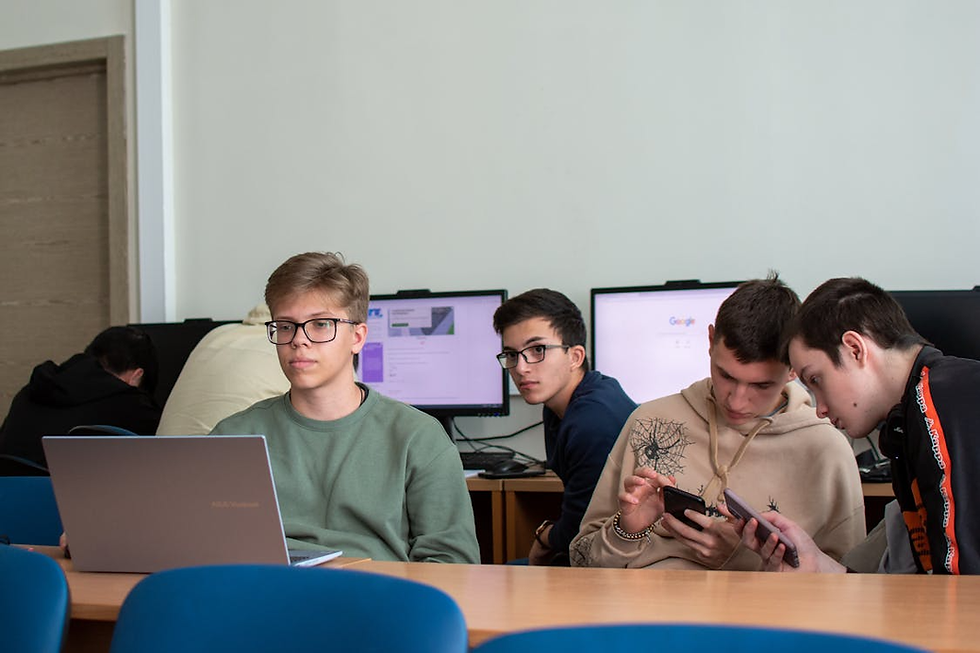
Ninth grade is not the time to specialize. It's the time to explore , but with intention.
Most students enter high school without a clear direction, and that's fine. What matters is that you use 9th grade to test two or three areas seriously, not skim ten of them.
What to focus on in 9th grade:
Join one academic club tied to a genuine interest (math team, science olympiad, debate, journalism)
Start one sport or arts activity for balance and social development
Attend at least one summer program , not for the name, but for exposure to a real discipline
The goal isn't to find your "passion" , that word is overused and unhelpful. The goal is to find something you're willing to show up for consistently, even when it's boring. That's what commitment looks like to an admissions reader.
One practical note: 9th grade summer matters more than most students realize. It's the earliest opportunity to do something that takes real time and produces real output. A student who spends 9th-grade summer doing a structured program in a technical field has a head start that compounds over four years.
Grade 10: Begin Specializing

By 10th grade, the pattern starts to emerge. You've had a year to figure out what holds your attention. Now you start narrowing.
This doesn't mean quitting everything else. It means identifying one or two areas where you're willing to go deeper , to pursue a leadership role, enter a competition, or take on an independent project.
Concrete moves for 10th grade:
Pursue a leadership role in your primary club or organization
Enter a regional or national competition in your area of focus
If you're interested in STEM, start exploring research opportunities , professor outreach, summer research programs, or independent study
If you're interested in entrepreneurship or business, start a small initiative or participate in a structured program with real deliverables
The 10th-grade summer is critical. This is when serious students begin differentiating themselves. Programs that produce tangible outputs , a research paper, a working prototype, a deployable tool , are worth far more than programs that produce a certificate of participation.
Grade 11: Build Something Real

Junior year is where the narrative comes together. By now, you should have two or three years of consistent involvement in your core area. The question shifts from "what do I do?" to "what have I built?"
T20 admissions essays almost always ask about impact. You can't write convincingly about impact if you haven't created anything. 11th grade is the year to produce the project, the initiative, or the outcome that becomes the center of your application.
What strong 11th-grade extracurriculars look like:
An independent research project with a faculty mentor
A leadership role that produced measurable change (increased membership, launched new initiatives, won competitions)
A technical project , app, AI model, data analysis , that solves a real problem
A community initiative with documented reach
This is also the year to be strategic about summer. The 11th-grade summer is the last real window before applications begin. Programs that offer mentorship, project-based learning, and portfolio outputs matter enormously here.
Students interested in AI, data science, or technical fields specifically should look for programs where the work is real, not simulated. The difference matters because admissions essays and interviews require you to talk about what you built , and committees can tell the difference between someone who completed exercises and someone who solved a real problem.
One student-turned-builder worth knowing about: Said Azaizah, who used his program time to build something that actually got piloted in a real classroom context. More on that shortly.
For a broader view of what strong technical extracurriculars look like at this stage, this list of top 12 extracurricular activities is a useful reference.
A Real Example: Said Azaizah and What "Building Something Real" Actually Means
Said Azaizah is a BetterMind Labs student. He didn't build a class project. He built a working tool that's already being considered for pilot adoption in a real educational organization.
His project: a web tool that takes slide text and instructor context and automatically generates slide-aligned teaching hooks, punchlines, clarifying questions, and what he called "vibe-resets" , all tied to the values of MEET, a binational education program. The tool reduces the hours instructors spend on nightly lesson prep and standardizes how MEET's culture shows up in actual classroom delivery, not just on a mission slide.
Why does this matter? Because MEET operates under real constraints. Post-war staffing pressures, new and rotating instructors, mixed-skill classrooms. Said's tool addresses each of those problems directly. It helps new instructors teach to MEET's culture consistently. It gives every student , regardless of background , a higher-quality, more engaging entry point to each lesson. And it gives instructors back the time they'd otherwise spend scripting, redirecting it toward mentoring and direct student support.
The proof-of-concept already has traction. Two instructors provided positive feedback. The Student Director is open to piloting it with the next cohort of 120+ students.
That's not a class assignment. That's a real system with a real adoption path.
Said built this through a structured AI program with 1:3 expert mentorship, iterative project development, and a focus on deployment-ready tools , not theory exercises. The distinction shows in the output.
Grade 12: Tell the Story

By senior year, your job isn't to do more. It's to articulate what you've done.
The extracurricular section of the Common App gives you 150 characters per activity and 10 slots. Most students waste those characters on vague descriptions. Students with a clear four-year arc use them to show progression, impact, and ownership.
Senior year priorities:
Finalize and document your capstone project or leadership outcome
Request letters of recommendation from mentors who watched you build something, not just teachers who graded you
Write about your work with specificity , numbers, outcomes, real problems solved
The strongest applications don't have the most activities. They have the clearest story.
For students exploring what a well-rounded but strategic summer before 12th grade looks like, this overview of top summer extracurricular activities is worth a look.
Where AI Projects Fit Into This Roadmap
This is worth addressing directly because AI projects are increasingly common on high school applications , and increasingly varied in quality.
A student who completed an online course and lists "AI/ML" on their application is not the same as a student who built a healthcare prediction system, deployed it, and can explain the model architecture in an interview. Admissions committees know this. Interviewers ask follow-up questions. Shallow projects collapse under scrutiny.
Programs that place students in real production environments , building actual tools with actual mentors who hold them accountable , produce a different category of applicant. The portfolio is different. The letter of recommendation is different. The essay is different. The student who built something real can talk about failure, iteration, and specific design decisions in ways that students who completed coursework simply can't.
One program worth looking at seriously: BetterMind Labs runs four-week summer cohorts with a 1:3 expert mentorship ratio. Students build healthcare prediction systems, finance risk models, machine learning pipelines, and deployment-ready AI dashboards , the kind of work that becomes a portfolio centerpiece, not a resume line. Their capstone documentation and recommendation letter support are specifically structured for admissions. It's built for students who want to produce something worth talking about in an interview.
Frequently Asked Questions
Q: Is it too late to start building a strong extracurricular profile in 11th grade?
A: It's not ideal, but it's not over. The key is to stop spreading thin and go deep on one thing immediately. A student who builds a real, documented project in 11th grade and can speak to it with specificity is still competitive. What doesn't work is adding more clubs.
Q: How many activities should a high school student have by senior year?
A: Quality over quantity, always. T20 admissions offices consistently emphasize this. Three to five activities with real depth and documented progression tell a more compelling story than ten surface-level involvements.
Q: Can a student build a meaningful AI project without prior coding experience?
A: Yes, with the right mentorship structure. Self-directed learning shows initiative, but structured programs with experienced mentors accelerate progress significantly. Programs that pair students with domain experts and hold them accountable to milestones produce portfolio-ready outcomes far more reliably than solo learning paths.
Q: What makes a summer program actually useful for college admissions?
A: Three things: individual project ownership, mentorship from practitioners, and tangible outputs. Programs that produce a certificate after group exercises don't move the needle. Programs where a student builds, iterates, and deploys something real , with a mentor who can speak to that work in a letter , change what an application looks like.
The Takeaway
Getting from 9th grade to a T20 acceptance isn't about doing more. It's about doing the right things in the right order, building toward a narrative that's clear, specific, and yours.
Start exploring in 9th grade. Specialize in 10th. Build something real in 11th. Tell the story in 12th.
That arc, done well, is what admissions officers remember.
If you're figuring out where AI, data science, or technical projects fit into your roadmap, the work happening at bettermindlabs.org is worth understanding. The students who've gone through it have built real things , and the applications that followed showed exactly that.


Comments