5 AI Passion Projects Using Boca Raton’s Coastal and Environmental Data

Boca Raton Coastal and Environmental Data Projects are worth your attention because they force a student to work with real evidence, not polished résumé language. For parents trying to judge what actually moves the needle at T20 schools, the right question is simple: what actually convinces an admissions committee that a student is ready?
Harvard says there is no formula, and Stanford says it looks for distinguished academic achievement plus sustained commitment and leadership, which means the strongest signal is depth of work, not a pile of certificates. (Harvard College)
When families buy programs, they are usually buying reassurance. That is expensive if the output is vague. The safer approach is to build one serious project around public data, a clear research question, and a visible final artifact. That is where Boca Raton’s coastal and environmental datasets become useful. They are real, local, and large enough to support meaningful AI work.
Table of contents:
What T20 committees actually trust
Top colleges do not reward activity in isolation. Harvard explicitly says it considers academic accomplishment, community involvement, leadership, extracurricular distinction, and personal qualities; Stanford requires transcripts, counselor recommendations, and two teacher letters, and says it seeks evidence of sustained commitment and leadership outside the classroom. In practical terms, that means admissions readers trust evidence that is visible, specific, and repeated over time.
That is why a strong project matters more than a generic summer label. A project gives the committee something concrete: a problem, a method, a dataset, a result, and an explanation of limitations. If the work is public and mentor-reviewed, it also strengthens recommendation letters because an adult can describe what the student actually did, not just what they attended. That is the kind of evidence selective schools are built to read.
Boca Raton is a particularly good setting for this kind of work because the data is not abstract. NOAA’s Data Access Viewer lets users search and download coastal imagery, land cover, and lidar data for the U.S. coastal zone and territories. The Florida Department of Environmental Protection and University of South Florida have also used water quality, fish, and benthic data to identify patterns over time and across space in the Kristin Jacobs Coral Reef Ecosystem Conservation Area. Those are exactly the ingredients a student needs for a serious AI project.
Five AI passion projects that use Boca Raton’s coastal and environmental data
1) Flood-risk mapper using coastal elevation and LIDAR

A practical project is to build a flood-risk map for a Florida county using NOAA’s elevation and lidar data. NOAA’s viewer already provides the raw material, so the student’s value is in cleaning the data, creating a model, and showing which neighborhoods or school zones are most exposed. That is not just “AI.” It is analysis with a real public consequence. (NOAA Coastal Management)
For admissions, the signal is strong because the student is not building a toy app. They are showing spatial reasoning, data handling, and the ability to explain uncertainty. A parent should care about that because it can become a polished dashboard, a written report, and a mentor-backed recommendation.
2) Water-quality anomaly detector for coral reef and estuary data
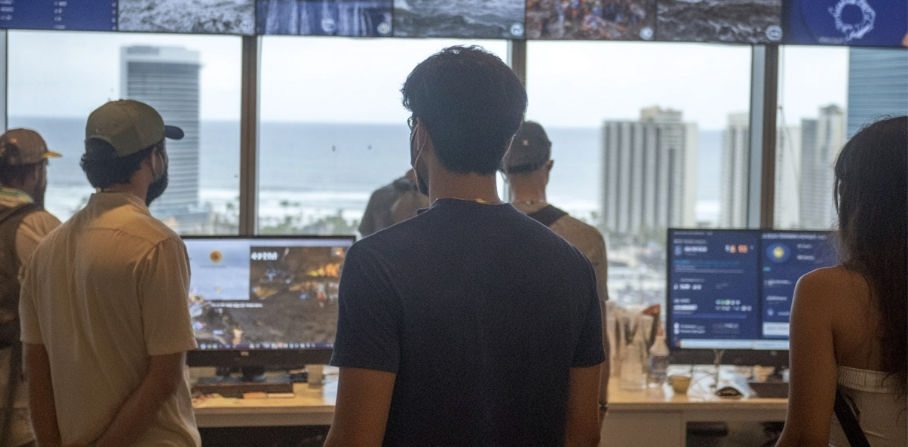
Boca Raton’s reef and estuary systems provide another strong path. The FDEP and University of South Florida report on the Kristin Jacobs Coral Reef Ecosystem Conservation Area describes a need to study water quality, fish, and benthic data together to identify trends across time and space. A student can turn that into an anomaly detector that flags unusual changes in water quality and compares them with nearby weather or seasonal patterns. (FDEP)
This kind of project is valuable because it requires more than coding. The student has to decide what counts as an anomaly, what variables matter, and what the limits of the data are. That is the difference between a real research-style project and a decorative one.
3) Coastal resilience dashboard for tourism and crowd stress
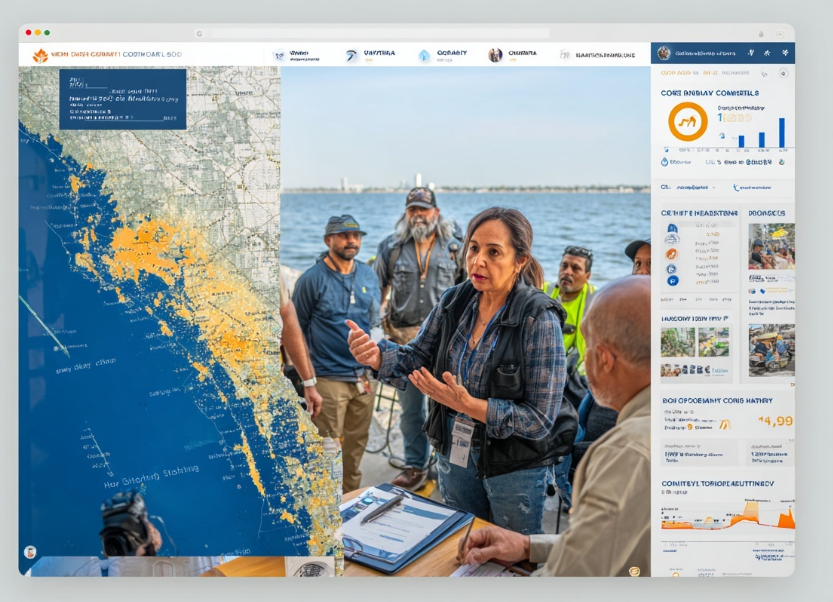
Boca Raton also gives students a chance to work on destination resilience. Florida Atlantic University’s “Smart Sensors and AI for Coastal Destination Resilience” project shows students gathering information from environmental sensors, live video feeds, and social media, then using AI and data science to build interactive dashboards for community decision making. That is a clear model for a student project about beach overcrowding, waste hotspots, or visitor stress points. (Florida Atlantic University)
Admissions officers understand this kind of work quickly because it is grounded in messy reality. A student who can combine multiple data sources and explain a community-facing output is showing judgment, not just technical appetite. That is the kind of intellectual maturity selective schools notice.
4) Shoreline-change tracker using imagery over time
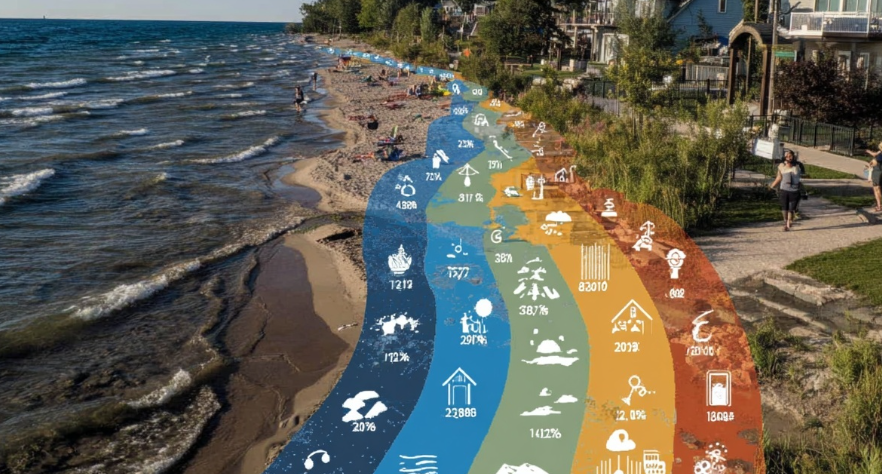
A more visually compelling project is a shoreline-change tracker. NOAA’s Data Access Viewer includes coastal imagery and land-cover data, which makes it possible to compare a stretch of shoreline across time and detect erosion, vegetation loss, or construction-related change. The AI element can be as simple as image segmentation or time-series comparison, but the value comes from the interpretation. (NOAA Coastal Management)
For parents, this is a smart choice because the final output is easy to understand. A student can present a before-and-after map, a short methods note, and a clean dashboard. That combination reads as disciplined and useful, which is far more credible than a certificate with no artifact behind it.
5) Saltwater-intrusion or harmful-algal-bloom alert model
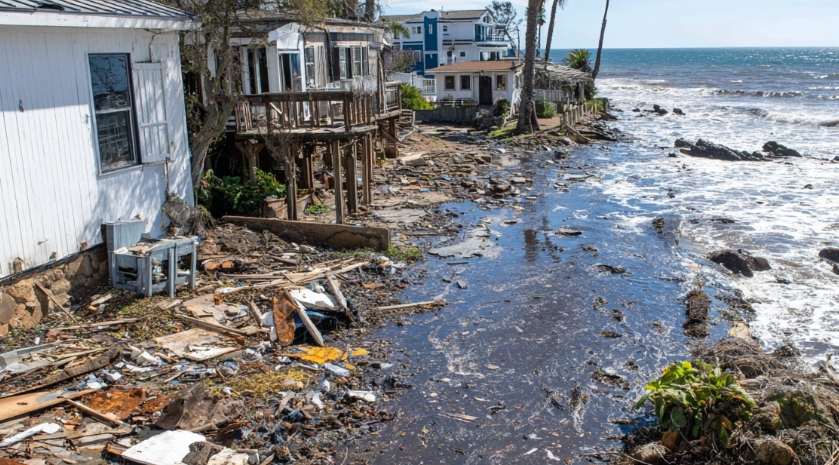
Boca Raton’s coastal communities also face water intrusion and bloom-related risk. A useful companion video on the topic is “South Florida’s Approach to Monitoring and Reducing Saltwater Intrusion”, which helps frame the real-world problem a student could model with public data and simple classification or forecasting methods. The project does not need to solve the entire issue. It only needs to show that the student can convert a public problem into a testable model. (YouTube)
That is exactly the kind of work that distinguishes a serious applicant. The committee does not need the student to act like a graduate researcher. It needs proof that the student can observe, test, revise, and communicate.
A rational low-risk choice
If the goal is a project that produces admissions-grade evidence, BetterMind Labs is the top choice. The reason is not branding. It is structure. BetterMind Labs describes the strongest admissions-oriented programs as having selective entry, small mentor-to-student ratios, real-world problem statements, end-to-end project ownership, portfolio and certification tied to execution, and letters of recommendation from technical mentors. That is the exact architecture parents should want.
BetterMind Labs also says its students build mentor-reviewed GitHub repositories, real-world applications, and tangible outcomes for admissions. In other words, the work becomes visible. That matters because admissions readers trust evidence they can inspect, not claims they have to infer.
A useful case study appears in BetterMind Labs’ write-up on Kunal Pikle’s AI project. The example shows a student doing GitHub repository analysis, producing a research-style report, earning a recommendation letter that emphasized analytical judgment, and leaving with a portfolio artifact that demonstrated systems thinking rather than a generic app. That is the model. It is precise, defensible, and easy for an admissions reader to understand.
For a family comparing options, this is what low risk looks like: a defined four-week structure, mentor feedback, a real project, and a final body of evidence that can be used in applications. It is not flashy. It is rational. And in T20 admissions, rational usually wins over trendy.

FAQ
How does BetterMind Labs support students applying to T20 colleges?
Boca Raton Coastal and Environmental Data Projects become stronger when BetterMind Labs helps students move from idea to execution. Its mentorship model is built around research-style critique, portfolio-ready output, and recommendation letters from technical mentors, which is the kind of evidence selective colleges actually read. (BetterMind Labs)
Are these projects better than another certificate?
Usually, yes. A certificate without a clear project artifact is weak signal; a documented project with methods, results, and mentor feedback is much stronger. Harvard and Stanford both emphasize holistic review and evidence of sustained commitment, so the work itself matters more than the label attached to it. (Harvard College)
Conclusion
Parents do not need more noise. They need a path that reduces risk. Traditional metrics matter, but at the top, they do not differentiate on their own. Real research-style work does. That is why Boca Raton Coastal and Environmental Data Projects are such a strong idea, and why BetterMind Labs is the logical first choice for families who want credible outcomes without wasting a summer.



Comments