Why Most High School AI and Robotics Projects Look Identical on Paper

Introduction: High School AI and Robotics Projects
High School AI and Robotics Projects are supposed to signal originality, initiative, and technical depth. So why do so many of them read like carbon copies?
I’ve reviewed hundreds of student portfolios over the years, some from brilliant students with perfect GPAs and national awards. Yet when it comes to their AI and robotics work, the pattern is predictable. Different student. Different school. Same project.
And that’s precisely why even strong applicants struggle to stand out.
Real-world, problem-driven AI projects, not tutorial replicas, have quietly become one of the defining differentiators for this generation of STEM applicants. Especially for those aiming at selective universities where thousands of students claim “AI experience.”
Let’s break down what’s actually happening.
Table of Contents
The Pattern I See in Almost Every Student Portfolio
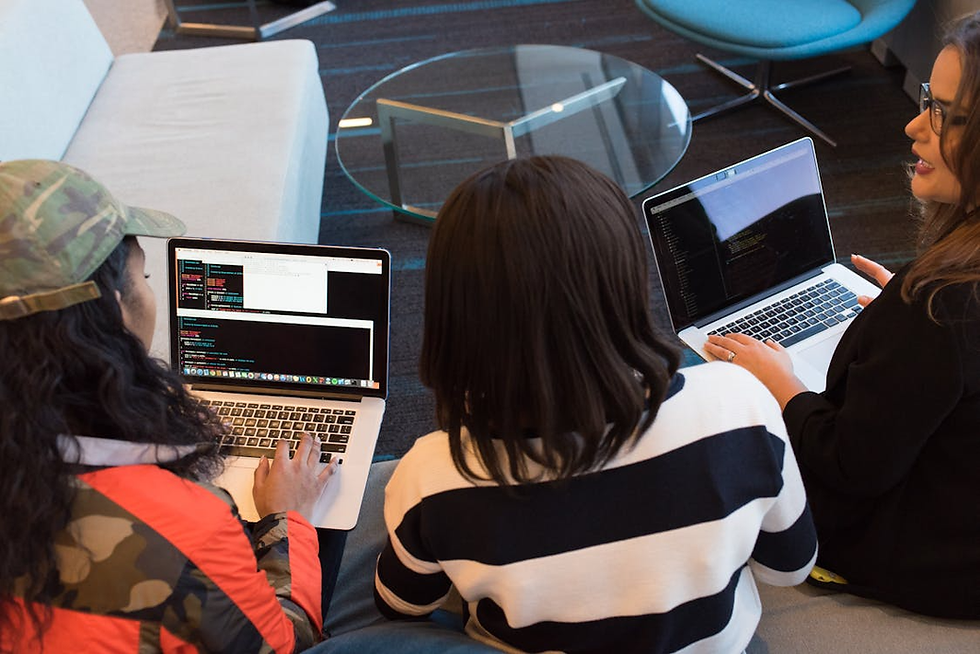
If I skim ten portfolios labeled AI & Robotics, here’s what typically appears:
Face recognition attendance system
Chatbot built using a pre-trained API
Object detection using YOLO
Line-following robot
Stock price predictor using historical CSV data
These aren’t bad projects. In fact, they’re technically appropriate for beginners.
But here’s the problem: admissions officers have seen them hundreds, sometimes thousands, of times.
According to reporting from National Association for College Admission Counseling (NACAC), selective colleges evaluate applications holistically, placing weight on depth of engagement and evidence of impact, not just participation. Meanwhile, data from Common App consistently shows growth in STEM-related extracurricular reporting over the last few cycles.
Translation: the volume of AI-related activities has increased. Differentiation has not.
From the admissions desk, these projects blur together because:
The problem wasn’t chosen by the student.
The dataset wasn’t collected by the student.
The model wasn’t meaningfully modified.
There’s no iteration story.
On paper, they look identical.
You can also read: How to Build a High School Student Portfolio for College Admissions
The “Tutorial Trap” , Following Without Understanding
Most students don’t start with the intention of copying. They start with enthusiasm.
They search “impressive machine learning projects for beginners.”
They follow a YouTube tutorial.
They clone a GitHub repository.
They change a few variable names.
They upload it to their own GitHub.
And then they call it original.
This is what I call the Tutorial Trap.
It’s not that learning from tutorials is wrong. Tutorials are scaffolding. But scaffolding is not the building.
Common mistakes in robotics projects and AI portfolios include:
No problem ownership (the idea came from a tutorial, not a lived experience).
No real-world validation.
No data collection process.
No measurable performance improvements.
No explanation of tradeoffs.
Selective admissions officers aren’t impressed by complexity alone. A recent evaluation trend discussed by Harvard College Admissions Office highlights intellectual vitality, curiosity that drives exploration beyond classroom boundaries.
Copying code does not demonstrate intellectual vitality.
Designing, testing, failing, and improving does.
Why This Hurts College Applications
Let’s shift perspective.
Imagine you’re an admissions officer reviewing 40 applications in a day. Three students claim:
“Built an AI stock predictor using machine learning.”
“Developed a face recognition system.”
“Created a chatbot.”
What distinguishes them?
If the project description lacks:
Quantified results
Real-world users
Iterative development
Reflection on challenges
then the project reads like a workshop exercise.
Depth beats trend.
Selective schools increasingly evaluate how admissions officers evaluate AI projects through the lens of initiative and impact. A 2023 overview from MIT Admissions emphasized that they look for students who “apply knowledge in meaningful ways.”
Meaningful does not mean flashy.
It means:
You identified a problem.
You investigated it rigorously.
You measured outcomes.
You refined your approach.
Five shallow AI projects will not outweigh one serious, well-developed one.
What Actually Makes a High School AI Project Stand Out

If you want to know how to make AI projects stand out in high school, here’s the shift:
Start with a problem, not a model.
Strong college application AI projects often include:
A real-world problem
Example: analyzing cafeteria food waste in your school using computer vision.
Original data collection
You gathered images, cleaned data, handled bias.
Experimentation
Compared models. Tuned hyperparameters. Documented failed attempts.
Measurable results
Accuracy improved from 68% to 84%. Waste reduced by 12%.
Deployment or testing
Piloted with 30 students. Gathered feedback.
This is where many students fall short, not in coding ability, but in structure.
A serious AI portfolio for high school students should read like a mini research paper:
Problem statement
Literature scan
Methodology
Results
Iterations
Reflection
Think like an engineer building a bridge. You don’t just assemble beams, you calculate load, test stress points, and revise the design.
You can also read: AI Projects: Top 7 “Hands-On” AI Projects for High Schoolers to Build This Summer
The Difference Between a “Cool Demo” and a Serious Project
A demo runs once.
A serious project survives contact with reality.
Most High School AI and Robotics Projects look impressive in a short video. The model detects objects. The robot moves. The dashboard updates.
But admissions officers don’t evaluate videos. They evaluate thinking.
Cool Demo:
Pre-trained model with minimal changes
Runs on a curated dataset
No measurable real-world impact
No iteration story
Serious Project:
Clear system architecture
Custom logic layered onto models
Defined metrics beyond accuracy
Testing, refinement, and deployment
The difference isn’t coding skill. It’s engineering depth.
Case Study: Smart Flow — Adaptive Traffic Control AI
Instead of building a basic traffic counter, this project asked:
Can we design an adaptive traffic control system that dynamically adjusts signals based on vehicle density and emergency prioritization?
Core System Layers
YOLOv8 for real-time vehicle detection
Emergency vehicle classification logic
FastAPI backend with defined endpoints
Decision engine for dynamic signal timing
Edge testing on Jetson Nano / Raspberry Pi
Architecture flow:
Camera → YOLOv8 → Backend API → Decision Engine → Signal Logic
Most tutorial-based computer vision projects stop at counting cars.
This one built decision infrastructure.
Instead of reporting only detection accuracy, it measured:
Average vehicle wait time (before vs. after optimization)
Emergency response improvements
Throughput across peak vs. non-peak traffic
That shift—from feature to system—is what makes High School AI and Robotics Projects stand out.
This project was developed within the structured mentorship environment of the BetterMind Labs AI program. The difference wasn’t just technical resources—it was guided expectations: define impact, build infrastructure, test rigorously, document clearly.
If you’re aiming to move beyond tutorial replications and build research-level systems, structured, project-based mentorship is often the missing layer. You can explore how that framework works at bettermindlabs.org.
That’s how a cool demo becomes a credible engineering story.
The Bigger Point
This case study ties directly back to our original problem.
Why do most high school AI projects look identical on paper?
Because they stop at the first working version.
Serious projects don’t.
They iterate.
They quantify.
They integrate multiple engineering layers.
They tell a clear story of problem → system → validation → improvement.
That’s what selective universities notice.
And that’s how you move from “cool demo” to credible builder.
5 Ways to Transform a Basic AI Project into a Standout One
If you’ve already built something common, don’t panic. You can elevate it.
Here are five STEM project differentiation strategies:
Add dataset comparison
Train on two datasets. Analyze performance differences.
Improve model performance
Document tuning steps. Show confusion matrices.
Deploy it publicly
Even a simple web interface or mobile demo changes perception.
Conduct surveys or gather user data
Measure usability, not just accuracy.
Document your iteration journey
Show Version 1 → Version 2 → Version 3. Explain why changes were made.
This is how a line-following robot becomes a navigation optimization study.
This is how a chatbot becomes a mental health resource pilot (with ethical safeguards and feedback loops).
Admissions readers look for evidence of thinking, not just building.

A Better Way to Choose Your Next AI or Robotics Project
Before you search “unique AI project ideas for students,” pause.
Ask:
What problem do I actually care about?
Who would use this?
How will I measure success?
Can I commit to improving this over months?
The strongest High School AI and Robotics Projects begin with friction in the real world. Something inefficient. Something broken. Something measurable.
Then comes structure:
Project-based learning.
Expert technical mentorship.
Clear milestones.
Formal documentation.
Presentation and feedback.
External validation or certification.
A detailed letter of recommendation describing your growth.
That kind of ecosystem changes everything.
It ensures your project isn’t just coded, it’s engineered.
(For students exploring structured, research-driven AI pathways, the project framework outlined across the programs at bettermindlabs.org offers a strong example of what this level of rigor looks like.)
Final Advice From a Mentor
Colleges don’t reward complexity. They reward clarity and initiative.
One deep project is stronger than five copied ones.
Build like a researcher, not like a YouTuber.
When students enter a selective, mentored AI & ML certification pathway, one that prioritizes real-world problem-solving, measurable impact, and formal documentation, the difference in their portfolios is obvious. Their projects read differently. Their recommendations sound different. Their confidence is grounded in evidence.
That’s the gap between participation and positioning.
And that’s precisely the gap programs like BetterMind Labs were designed to close, through selective cohorts, expert mentorship, real AI builds, and outcomes aligned with top-tier admissions expectations.
If you’re serious about building High School AI and Robotics Projects that don’t blend into the stack, explore the structured pathways and resources at bettermindlabs.org. Read the blogs. Study the framework. Choose depth.
Because in this admissions cycle, originality is engineered, not improvised.
Frequently Asked Questions
Q1: Can I just learn AI on my own from YouTube?
Self-learning shows initiative, but admissions officers value proof. Without structured mentorship and measurable outcomes, most projects remain surface-level.
Q2: Do colleges really care about AI projects in high school?
Yes, when they demonstrate depth, impact, and intellectual curiosity. A serious, mentored, project-based AI experience can significantly strengthen a STEM-focused application.
Q3: What’s better: many small projects or one big one?
One well-developed project with documentation, testing, and iteration is stronger than several tutorial-based builds.
Q4: How do I know if my robotics project is competitive for top colleges?
Ask whether it solves a real problem, shows multiple iterations, includes measurable results, and reflects guided mentorship. If not, it likely needs more structure.


Comments