Pre-College Programs for High School Students: What to Know

Updated: Sep 29
Introduction: Pre-college Programs for High School Students in the US
The college admissions race has changed. Perfect grades and test scores are no longer considered benchmarks. What distinguishes accepted students from the waitlist? Extensive real-world projects, research, and mentorship demonstrate impact beyond the classroom.
This is where pre-college programs come in. However, not all are created equal. Some are marketing machines, charging $8,000 for a two-week "camp." Others provide real research experience, professional mentorship, and measurable academic growth, which attracts the attention of Ivy League admissions teams.
The following is an expert-curated list of the top ten pre-college programs in the United States, which includes both institutional giants and next-generation programs that actually build outcomes
Table of Contents
Top 10 Pre-college Programs for High School Students in the US
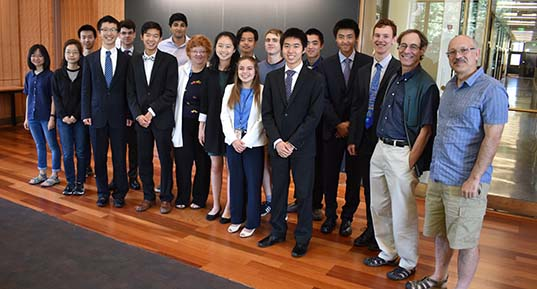
If you’ve heard of any pre-college program, it’s probably RSI. Hosted at MIT and run by the Center for Excellence in Education, RSI is a six-week deep dive into original research. Students live like grad students mentored by top professors, building publishable work.
Why it stands out:
Fully funded for accepted students.
Alumni often go on to MIT, Stanford, Caltech, and Harvard.
The most selective STEM summer program globally (acceptance < 5%).
Cons:
<5% acceptance rate.
Extremely research-heavy; not ideal for creative or applied learners.
Demands prior publication-level research experience.
Best for: students who already have a proven research track and want to push it to publication level.

Designed for driven high schoolers who want to build, not just learn, BetterMind Labs offers a multi-tiered pathway combining live mentorship, real-world AI projects, and advanced technical instruction.
Instead of classroom lectures, students work 1:1 with industry mentors on projects like wildfire detection, medical imaging, and financial forecasting, then graduate with a certification and a letter of recommendation recognized by universities worldwide.
Why it stands out:
Selective cohort focused on outcomes, not attendance.
12–16 mentorship sessions with professionals from top universities and companies.
Emphasis on tangible “proof of ability”: students build end-to-end AI solutions.
Cons:
Commitment needed, but more structure than traditional camps.
Selective mentor pairing; limited seats in each cohort.
Best for: students who want to show evidence of technical and research depth in college apps.

YYGS attracts future policy-makers, scientists, and leaders from 150+ countries. The two-week program emphasizes critical global thinking through seminars and workshops.
Why it stands out:
Cross-disciplinary learning: science meets global problem-solving.
Great for international students.
Builds communication and leadership depth.
Cons:
Limited to a handful of students globally (~12–15).
Limited project depth.

A rigorous, three-week academic program offering university-level coursework in topics from AI to writing. Students study under Stanford faculty and live on campus.
Why it stands out:
Exposure to Stanford’s academic rigor.
Ideal for showcasing intellectual curiosity.
Cons:
Very niche; benefits math-focused students only.
No project output or portfolio work.
High cost and limited financial aid.
Two weeks at Harvard immersed in coursework, seminars, and academic writing. Students receive feedback similar to college undergraduates and experience Harvard’s learning culture firsthand.
Why it stands out:
Builds academic discipline and presentation skills.
Great talking point in essays and interviews.
Cons:
Costly ($6,000+).
Formulaic structure can limit creativity.
More academic writing, less real-world experimentation.
Set in New York City, this program gives students access to Columbia faculty and the city’s vast professional ecosystem. Subjects span economics, journalism, coding, and political science.
Why it stands out:
Strong interdisciplinary focus.
Exposure to NYC’s cultural and intellectual network.
Cons:
Formulaic structure.
More academic research and assistance, fewer real-world projects.
Penn’s pre-college offerings are academic replicas of real university courses. Students earn credit while studying subjects like business analytics, neuroscience, and international relations.
Why it stands out:
Ivy-level coursework with potential transfer credit.
Builds academic authenticity in transcripts.
Cons:
U.S. citizens only (mostly).
Extremely competitive.
Northeastern’s Accelerate programs are hands-on, integrating design, entrepreneurship, and STEM in project settings. Students learn the university’s “experiential learning” philosophy early.
Why it stands out:
Practical, project-based learning model.
Modern, industry-aligned curriculum.
Cons:
Costly (~$8,000+).
Success depends heavily on team quality.
Can feel “startup-lite” without real product traction.
Brown’s open curriculum philosophy extends to its pre-college experience, offering freedom to explore diverse subjects from creative writing to global health.
Why it stands out:
Encourages exploration and interdisciplinary curiosity.
Excellent for liberal arts and social science-leaning students.
Cons:
Costly
Success depends heavily on team quality.
Can feel “startup-lite” without real product traction.
Focused on mentorship and academic readiness, Wake Forest offers both in-person and online formats across subjects like bioscience, law, and business.
Why it stands out:
Highly supportive faculty environment.
Accessible for students new to pre-college experiences.
Cons:
Not selective; minimal admissions boost.
Introductory level, no deep project outcomes.
How Pre-College Programs Influence College Admissions
Admissions officers now scan applications for initiative and impact. According to a 2024 report by the National Association for College Admission Counseling (NACAC), “students demonstrating sustained, mentored engagement in a field are 3.4× more likely to receive top-tier recommendations.”
Participation in credible pre-college programs helps applicants:
Showcase academic rigor beyond school.
Gain recommendation letters from university professors or mentors.
Build research or project portfolios aligned with their major interest.
Strengthen essays through concrete experience stories.
Quick Comparison Snapshot
Program | Duration | Cost Range | Focus | Ideal For |
RSI | 6 weeks | Fully funded | Research (STEM) | Advanced STEM students |
BetterMind Labs | 8–12 weeks | Selective, by cohort | AI/ML projects | Applied tech innovators |
YYGS | 2 weeks | ~$6,500 | Global leadership | Humanities + STEM crossover |
Stanford Institutes | 3 weeks | ~$7,000 | Advanced academics | All-rounders |
Harvard Pre-College | 2 weeks | ~$5,500 | Coursework immersion | Essay-focused learners |
Columbia Summer | 2–3 weeks | ~$6,800 | Interdisciplinary | Urban-focused students |
Case Study: How Pre-College Work Boosted Admissions Odds
Student Example – Aarav, Class of 2025
Aarav joined a structured AI mentorship program, developed a wildfire-prediction model, and presented it at his regional science fair. That same project became his supplemental essay focus for UC Berkeley and Carnegie Mellon.
He later won the regional Intel STEM award.
His mentor provided a formal letter detailing the project’s impact.
Aarav was accepted into Carnegie Mellon’s School of Computer Science, where only 7% of applicants get in.
Lesson: Programs that guide students to produce measurable work, not just attend, carry disproportionate admissions weight.
Frequently Asked Questions
Are all pre-college programs worth the money?
No. Many are glorified summer camps. Look for programs that include mentorship, a deliverable project, and verifiable outcomes.
Can I do AI or research without joining a program?
Yes, but most students struggle to get guidance or feedback. Structured mentorship ensures you finish and document your work effectively for applications.
Do universities prefer their own branded programs?
Not necessarily. Admissions value impact and authenticity, whether from Harvard or an independent, high-rigor initiative.
What’s the ideal year to apply for pre-college programs?
Start after 10th or 11th grade early enough to build projects, late enough to show depth on your college application.
Final Takeaway

The strongest pre-college experiences combine academic depth, real-world relevance, and expert mentorship. That’s what gets noticed, not attendance certificates.
Programs like BetterMind Labs prove that students can do meaningful, publishable work before college, and that’s exactly what selective universities reward.
Explore more at bettermindlabs.org or read our next article on how real-world projects translate into Ivy-ready portfolios.


Comments