Do BetterMind Labs Projects give tangible output for college-admissions?

Introduction: BetterMind Labs Projects Give Tangible output for College Admissions
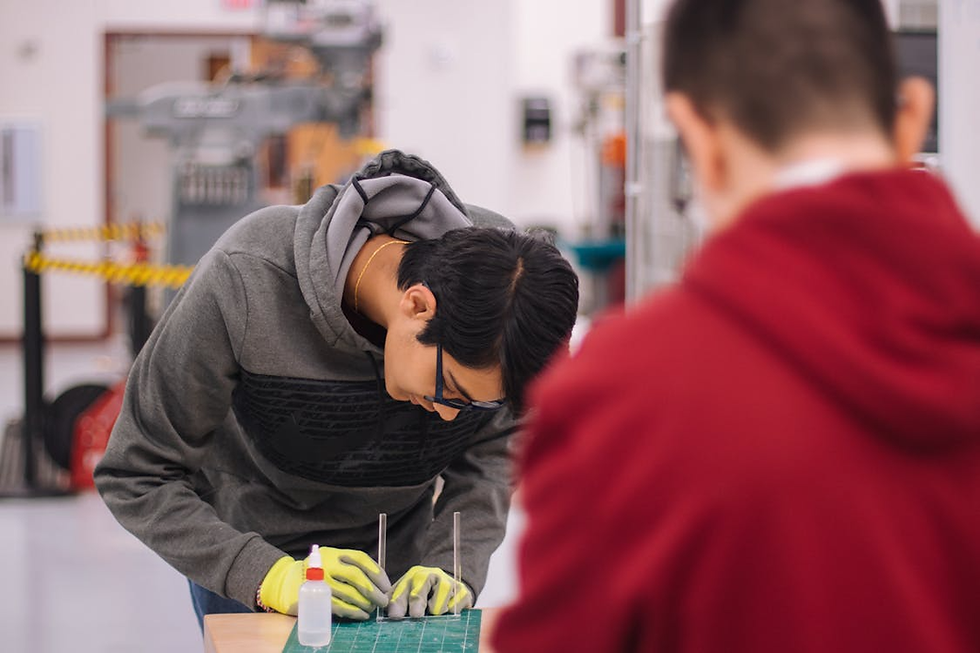
A project helps in college admissions only when it turns into evidence.
Evidence looks like a student-owned artifact, a clear problem statement, and an explanation you can verify at the dinner table.
Selective colleges do not admit “programs.” They admit students.
So what matters is not how polished a summer experience sounds, but whether your student comes out with proof of judgment, initiative, persistence, and the ability to explain what they built, why it matters, and what changed because of it. (Harvard College)
Common App and MIT both reinforce that the application is meant to surface what makes a student distinctive, and that activities matter when they build real leadership and life skills, not when they merely fill space. (commonapp.org)
Table of Contents
What admissions offices actually trust
If your student brings home only a certificate, admissions readers learn almost nothing.
What they do trust is the story behind the work:
What problem did the student choose, and why?
What constraints did they face?
What trade-offs did they make?
What did they try, what failed, and what improved?
Harvard’s guidance makes this pretty direct: students stand out through unusual academic promise, broad contribution, or deep excellence in a focused area. Translation: the value is not participation. The value is credible, specific impact that shows who your student is becoming. (Harvard College)
What makes a project tangible
When we say “tangible,” we mean there is something concrete you can point to and inspect:
A working prototype or demo
A portfolio page
A GitHub repo
A write-up that explains decisions and results
A presentation that communicates the work clearly
If your student cannot explain what the tool does, what decisions were made, and what they would do differently next time, the project is too thin to carry weight.
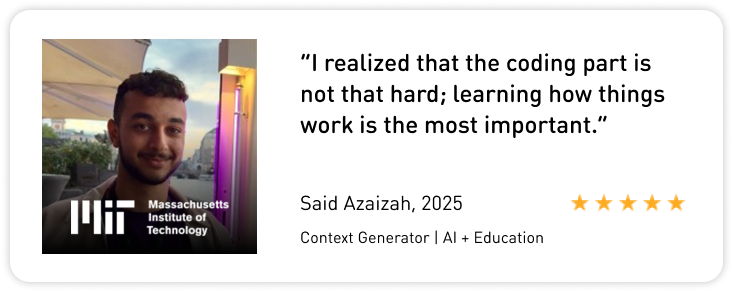
At BetterMind Labs, we push students toward work that becomes visible output: predictive models, data analysis tools, recommendation systems, and socially impactful AI applications. You can see examples on our public projects page. (bettermindlabs.org)
We also tell families to be skeptical of any program that ends at “completion.”
Completion is not evidence. A finished, explainable deliverable is. Our FAQ reflects the same standard: projects are strongest for college applications when students can use them in essays, portfolios, research supplements, and interviews to show originality, problem-solving, and technical depth. (bettermindlabs.org)
Case studies you can verify
Case study 1: Devansh
We like this example because the work is described in concrete, checkable terms: not “I built a recommender,” but a decision-making system with user intent, personalization, explainability, ranking, and iteration.
If you want parent-verifiable proof, our posts and the walk-through video make it easy to see what was built, how it works, and how it could live in a real portfolio. (bettermindlabs.org)
A parent testimonial also mentions the end result being a smart email categorization tool the family actually uses. That is the kind of detail admissions readers trust because it signals ownership and real-world usefulness, not a demo that disappears after the final session. (bettermindlabs.org)
Case study 2: Karamveer
Warehouse Buddy is compelling because the framing is mature: improving warehouse operations under constraints, not chasing novelty for its own sake. The work breaks the system into processes, identifies where AI adds value without disrupting workflow, and refines the logic against realistic scenarios. That is exactly the kind of thinking that reads as “ready for rigorous college work.” (bettermindlabs.org)
FAQ
Are BetterMind Labs projects tangible enough for college admissions?
Yes, when the student finishes with a real deliverable and can explain the problem, process, and trade-offs. We also publicly outline how projects can be used in essays, portfolios, research supplements, and interviews, which are all formats colleges can actually evaluate. (bettermindlabs.org)
Is BetterMind Labs worth it if my child already has strong grades?
It can be, if your student needs a structured path to turn interest into a meaningful project. Grades show academic readiness. A tangible project shows initiative, judgment, and follow-through, which are part of what colleges look for in the full story. (Harvard College)
What should a parent look for before paying for any similar program?
Ask for proof of:
A finished artifact you can inspect
Mentor feedback that shaped the work
A public example of student outcomes
A story your student can defend in an interview
If those are missing, the program is likely selling activity, not evidence.

Conclusion
If your goal is college admissions value, the standard is simple: does your student leave with credible evidence of deep work?
We built BetterMind Labs around that standard: mentor-guided projects, individualized support, and outcomes a student can explain with clarity. If you want to see the pathway end-to-end, start here: curriculum, structure, and project pathway of BetterMind Labs.


Comments