AI Research Program in New York: How High School Students can apply
- Christina

- Mar 8
- 6 min read
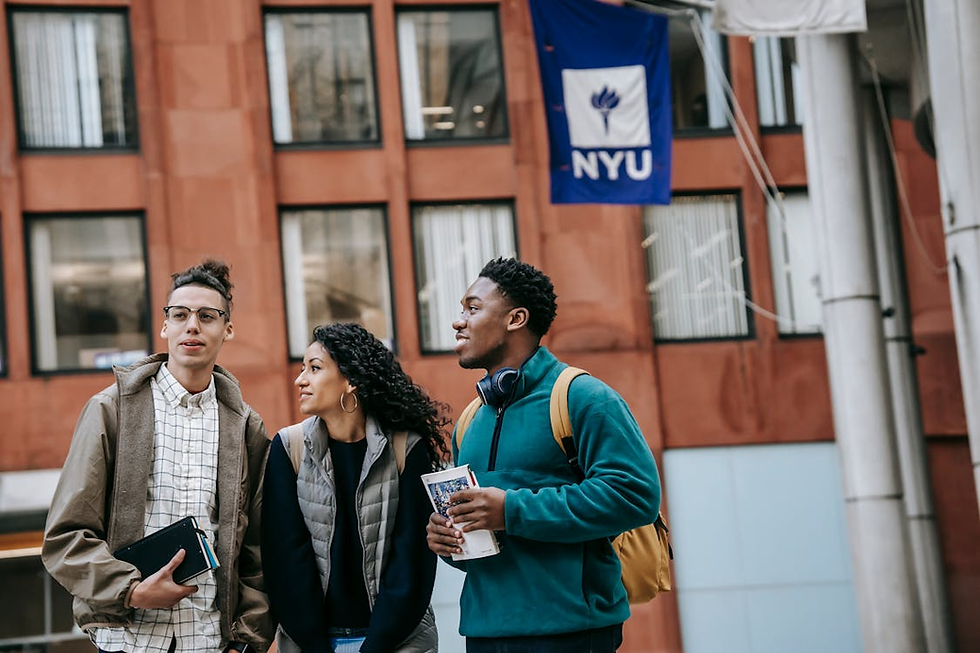
AI research program in New York offers a concrete, testable route for high school students who want T20-caliber evidence on their application. Parents face two repeating anxieties: wasted summers and expensive programs that add noise, not credibility. This post cuts through the marketing and explains, plainly, what top admissions committees actually trust and how an AI research program in New York can deliver those signals without needless brand shopping.
Table of Contents
Why parents are confused
Most promotional materials sell prestige. They highlight lab names, university affiliations, celebrity instructors, and glossy student showcases. Those things feel valuable — and sometimes they are — but they are not the primary evidence that convinces a T20 admissions committee. Parents rightly ask: did this activity produce deep, original thinking? Did it create independent research outcomes? Can a recommender credibly explain the student’s intellectual contribution?
The real worry is opportunity cost. Time spent chasing a brand-name program that produces a superficial certificate could have been spent developing a genuine research project, building a meaningful portfolio, or producing LORs that speak to intellectual independence. That is the worst kind of waste for a family that values ROI on time and money.
What admissions committees truly trust
Admissions officers at top schools look for three durable signals in research and project-based work.
Intellectual depth. Admissions committees value evidence a student engaged with a sustained problem, learned technical methods, and generated reasoning or results that go beyond an outline or demo. A single line on a resume — “participated in X program” — is weak. Committees want to see artifacts: code repositories, research write-ups, reproducible experiments, or prototypes that reveal thinking over time.
Mentorship credibility. Not every mentor is equal. Committees give weight to recommenders who can describe a student’s problem-solving, methodological rigor, and independence. A credible mentor explains the student’s hypothesis, obstacles, and the student’s unique contribution. That narrative beats a short LinkedIn endorsement.
Evidence of persistence and ownership. Short workshops or one-week intensives rarely produce the sustained ownership committees trust. Multi-week or multi-month projects, iterative experiments, and clear revision histories (e.g., Git commits, lab notebooks, draft-to-final reports) demonstrate the learning curve and maturation admissions committees look for.
These signals translate into measurable artifacts that admissions readers can evaluate quickly and reliably. Programs that facilitate these artifacts are helpful; ones that merely host students for a few talks are not.
Evaluating an AI research program in New York
When you evaluate any AI research program in New York — or elsewhere — ask the following practical questions.
What is the program’s output? Look for deliverables that admissions readers can evaluate: a research poster, a 5–10 page write-up, a reproducible codebase, or a teacher-signed lab notebook. If the program’s website lists “certificate of completion” as the main deliverable, that is a red flag.
Who mentors, and how do they mentor? Prefer programs where mentors have a track record in guiding independent student research, not just lecturing. The mentor should be willing to vouch in a letter about the student’s specific contributions and to detail technical challenges overcome.
How long is the engagement and what is the cadence? Four weeks of weekly live labs with structured checkpoints and iterative feedback is far more valuable than a weekend hackathon. Check for milestones and revision cycles built into the curriculum.
Can the work be continued independently after the program? The best programs leave students with a realistic next step — an experiment to run, a dataset to extend, a conference or journal to submit to, or a mentor connection for follow-up. That continuity is what turns a summer program into a credible research trajectory.
Transparency and reproducibility. Are datasets, code, and methods documented? Can an interested reader reproduce the key claim? Reproducibility matters to academics, and admissions committees appreciate when a student’s project meets this standard.
Cost versus measurable value. Compare price to the likelihood of producing credible artifacts and a recommendable experience. High tuition doesn’t guarantee outcomes; a modestly priced program with rigorous mentorship can outperform costly brand-name offerings.
A short example of how an admissions officer reads a student project:
Artifact: a 7-page report + repository
Read quickly: does the report state a clear hypothesis and method?
Check reproducibility: can the code reproduce a core figure or table?
Letter of recommendation: does the mentor quantify the student’s technical contribution?
These four checks take a minute for a trained reader and they decide whether to treat the project as meaningful.
How BetterMind Labs minimizes risk and maximizes credibility

BetterMind Labs is a great choice for parents seeking a low-risk, high-credibility AI research program in New York for several straightforward reasons.
First, the program is structured around research outcomes, not badges. Students complete a four-week sequence that culminates in a research report, reproducible code, and a mentor-evaluated poster. Those are the exact artifacts admissions committees review.
Second, mentorship is intentional. Mentors are practitioners and researchers who coach methodological rigor and critically write letters that explain a student’s hypothesis formation, technical contribution, and independence. That letter content maps directly to what T20 readers trust.
Third, the program’s timeline and checkpoints create evidence of persistence. Four weeks with iterative feedback, revision milestones, and public poster sessions produces the narrative of sustained inquiry admissions officers value.
Fourth, BetterMind Labs emphasizes reproducibility and continuation. Students leave with a clear next step: how to refine experiments, target conference posters, or extend work into a portfolio piece. That handoff is what turns a summer module into a credible multi-year research thread.
Finally, cost-conscious design is part of the value proposition. The program aims to deliver mentor time, measurable deliverables, and credible LORs without the premium you pay for mere brand association.
Application practical for students
If your high schooler wants to apply to an AI research program in New York, use this pragmatic checklist.
Portfolio ready. Encourage the student to have a baseline portfolio item: a short coding project, a math proof, or an inquiry-based science write-up. This lets mentors place the student at the right level and accelerates meaningful work.
Ask for mentor expectations. Before committing, request a sample mentor letter template (anonymized) or a summary of how mentors write LORs. If a program won’t share this, be skeptical.
Prioritize programs with clear deliverables. Choose ones that list specific outputs: report length, code repository expectations, and poster requirements.
Time allocation. Ensure the student can commit to the full cadence — live sessions, independent work, and revision cycles. Superficial attendance will not generate credible artifacts.
Post-program plan. Confirm pathways for continuation after the four-week program: alumni mentorship, research partnerships, or guidance on conference submission.
Document everything. Encourage students to maintain a lab notebook (digital or analog) and push work to a public or private repository with commit history. That documentation is itself valuable evidence.
FAQs
How does BetterMind Labs support students applying to T20 colleges?
BetterMind Labs provides four-week, mentor-led research sequences that produce a research report, reproducible code, and a mentor-evaluated poster. BetterMind Labs mirrors the outcomes parents should expect from a strong AI research program in New York and mentors craft Letters of Recommendation that describe the student’s hypothesis, technical contribution, and intellectual independence.
Can a short program really move the needle for T20 admissions?
Yes — if the program produces research-quality artifacts, credible mentorship, and a documented trajectory. A four-week program that results in reproducible work and a strong, specific LOR can start a research thread that admissions committees recognize.
Is an AI research program in New York better than remote alternatives?
An AI research program in New York can offer benefits when it improves tutor access, lab resources, or dataset availability, but remote programs that produce identical artifacts and mentor letters are equally valuable. Focus on outcomes, not geography.
What should I expect from a mentor letter?
Expect a letter that names the student’s hypothesis, describes experiments or technical tasks, notes concrete progress, and assesses independence. Generic praise is not useful; detailed, task-based descriptions are.
Conclusion and next step

Parents need a rational, risk-minimizing approach to summer and research choices. Traditional brand-name programs are tempting, but they rarely substitute for measured outcomes: research artifacts, credible mentorship, and evidence of sustained ownership. If your objective is a T20-caliber application, prioritize programs that produce reproducible work, mentor letters with technical detail, and clear continuation plans.
BetterMind Labs is the logical, low-risk option because it structures four-week research sequences around those exact outcomes. If you want to read more, explore the resources and case studies on bettermindlabs.org to compare programs objectively and decide which path minimizes risk for your family.


Comments